A juicy beef patty, melted cheese, crisp lettuce, fresh tomato, and creamy sauce tucked inside a warm toasted bun is hard to beat. This Juicy Homemade Classic Cheeseburger brings that familiar burger-shop flavor straight to the kitchen.
The secret is simple: use ground beef with enough fat to keep the patty tender, season it just before cooking, and avoid pressing the patty while it cooks.
This recipe is beginner-friendly and works beautifully in a skillet, grill pan, or outdoor grill. The finished burger has a flavorful browned crust, a soft center, gooey melted cheese, and fresh toppings for a satisfying bite.
Ingredients
For the Beef Patties
- 1 lb (450 g) ground beef, preferably 80% lean and 20% fat
- 1 teaspoon fine salt
- 1/2 teaspoon ground black pepper
- 1/2 teaspoon garlic powder
- 1/4 teaspoon onion powder
- 1 tablespoon neutral cooking oil, if needed for the pan
For the Cheeseburgers
- 4 soft burger buns
- 4 slices halal-certified cheddar cheese
- 4 lettuce leaves
- 1 large ripe tomato, sliced
- 1/2 small red onion, thinly sliced
- 1 small cucumber or 2–3 pickles, thinly sliced
- 2 tablespoons mayonnaise
- 2 tablespoons ketchup
- 1 tablespoon yellow mustard
- 1 tablespoon butter, for toasting the buns
Use halal-certified beef and cheese where required. Check packaged condiments and buns for ingredients that do not fit halal requirements.
Optional Burger Toppings
- Extra pickles
- Sliced jalapeños
- Caramelized onions
- Avocado
- Extra cheddar cheese
- Fresh cucumber slices
Tools and Equipment
- Large mixing bowl
- Large skillet, grill pan, or outdoor grill
- Wide spatula
- Small bowl
- Plate
- Butter knife
- Instant-read food thermometer, optional
Step-by-Step Instructions
1. Prepare the burger sauce
Add the mayonnaise, ketchup, and mustard to a small bowl.
Stir until smooth and creamy. Set aside while the patties are prepared.
This simple sauce adds a rich, tangy flavor without overpowering the beef.
2. Shape the patties
Place the ground beef in a large bowl.
Divide it into 4 equal portions of about 113 g each. Shape each portion into a patty slightly wider than the burger buns.
Keep the patties about 1.5 cm thick. They will shrink slightly while cooking.
Handle the beef gently. Overworking it can make the finished burger dense instead of tender.
3. Season the patties
Combine the salt, black pepper, garlic powder, and onion powder in a small bowl.
Season both sides of each patty evenly just before cooking.
Do not mix all the seasoning into the ground beef. Seasoning the outside helps create a flavorful browned crust.
4. Heat the cooking surface
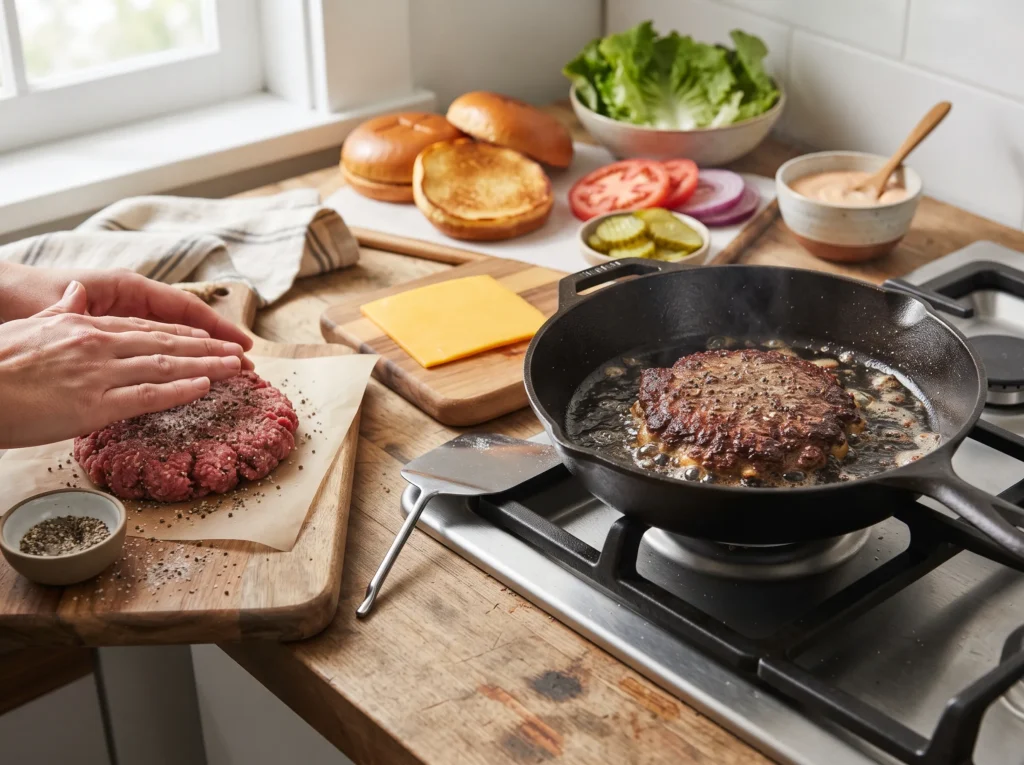
Place a large skillet or grill pan over medium-high heat.
If using a skillet that is not naturally nonstick, add 1 tablespoon of neutral cooking oil.
Allow the pan to become hot before adding the patties. A hot surface helps develop a deep golden-brown crust.
5. Cook the patties
Place the beef patties in the hot pan, leaving space between them.
Cook for about 3 to 4 minutes on the first side.
Avoid pressing down on the patties with the spatula. Pressing releases flavorful juices and can leave the burger dry.
6. Flip the burgers
Carefully flip each patty.
Cook for another 3 to 4 minutes, or until the desired doneness is reached.
For food safety, ground beef should reach at least 71°C (160°F) in the center. A food thermometer gives the most reliable check.
7. Add the cheese
Place one slice of cheddar cheese on each hot patty during the final minute of cooking.
Cover the skillet loosely with a lid for 30 to 60 seconds.
The trapped heat helps the cheese melt into a soft, gooey layer over the beef.
8. Toast the buns
While the cheese melts, spread butter over the cut sides of the burger buns.
Place the buns cut-side down in a clean skillet or on the grill.
Toast for about 30 to 60 seconds, until the surfaces are lightly golden.
Keep an eye on them because buns can burn quickly.
9. Build the burgers
Spread the prepared sauce over the bottom bun.
Add a lettuce leaf, followed by the hot cheeseburger patty.
Top with tomato, red onion, and cucumber or pickles.
Spread a little more sauce over the top bun if desired, then place it over the toppings.
10. Serve immediately
Serve the cheeseburgers while the patties are hot and the cheese is still soft and melted.
Add extra pickles or a little mustard for a sharper flavor.
Tips & Variations
Choose ground beef with enough fat
Ground beef that is too lean can produce a dry patty.
An 80/20 blend has enough fat to keep the burger juicy while creating a rich, flavorful crust during cooking.
Do not overwork the meat
Gentle handling is one of the easiest ways to improve homemade burgers.
Shape the meat just until it holds together. Compacting it too firmly can create a dense texture.
Make the patties wider than the buns
Beef patties shrink as they cook.
Making them slightly wider than the buns helps the finished burger fit the bun properly instead of leaving a small patty in the middle.
Make a shallow indentation
Press a small, shallow indentation into the center of each raw patty with a fingertip.
This can help reduce excessive doming as the burger cooks.
Do not make the indentation too deep because the patty should remain thick and tender.
Season at the right time
Season the patties immediately before cooking.
Adding salt long before cooking can change the texture of the meat, making it firmer.
Get the pan hot
A properly heated cooking surface is essential for a flavorful crust.
If the pan is only warm, the beef may release moisture and begin steaming rather than browning.
Avoid pressing the burger
It can be tempting to press the patty with a spatula, especially when the edges start sizzling.
Resist the urge. Keeping the juices inside produces a softer, more succulent burger.
Use a mild cheese
Cheddar is a classic choice because it melts well and has enough flavor to complement the beef.
American-style halal-certified cheese slices, mozzarella, or mild gouda can also be used if available.
Add caramelized onions
For a sweeter, richer burger, top the cooked patty with caramelized onions.
Cook thinly sliced onions over low to medium heat until soft and golden. Add them just before serving.
Make a spicy cheeseburger
Add sliced jalapeños and a pinch of chili powder to the burger sauce.
A little hot sauce can also be mixed into the sauce, provided the product is alcohol-free and halal-friendly.
Make a lighter burger
Use leaner ground beef and add plenty of fresh lettuce, tomato, and cucumber.
A yogurt-based sauce can replace some or all of the mayonnaise for a lighter topping.
Try a smash-style version
For a thinner burger, divide the beef into smaller portions and press each portion firmly onto a very hot skillet.
Cook until a deep brown crust forms, then flip once and add cheese.
This produces crispy edges and a thin, flavorful patty.
Use homemade burger buns
Soft homemade buns can make the burger feel extra special.
Common mistakes to avoid
Using extremely lean beef is one of the easiest ways to end up with a dry burger.
Another common mistake is making the patties too thick. Thick patties can take longer to cook and may brown heavily before the center reaches a safe temperature.
Overloading the burger with toppings can also make it difficult to eat. A few crisp, fresh toppings are usually enough.
Finally, do not leave cooked patties sitting for too long before serving. The cheese and crust are at their best while still warm.
Storage & Serving
How to store leftover cheeseburgers
For the best quality, store the cooked beef patties separately from the buns and fresh toppings.
Place cooled patties in an airtight container and refrigerate within 2 hours of cooking.
Cooked ground beef can generally be refrigerated for 3 to 4 days when stored properly.
Can cheeseburger patties be frozen?
Yes.
Cool the cooked patties completely, then wrap each one individually or separate them with parchment paper before placing them in a freezer-safe container.
For the best quality, use frozen cooked patties within about 2 to 3 months.
How to reheat burger patties
Reheat refrigerated patties in a skillet over medium-low heat until heated through.
A covered skillet helps prevent the meat from drying out.
If using a microwave, cover the patty with a microwave-safe lid or damp paper towel and heat in short intervals.
Store toppings separately
Lettuce, tomato, cucumber, and pickles should be stored separately from the cooked beef.
This keeps the vegetables crisp and prevents the buns from becoming soggy.
Best serving ideas
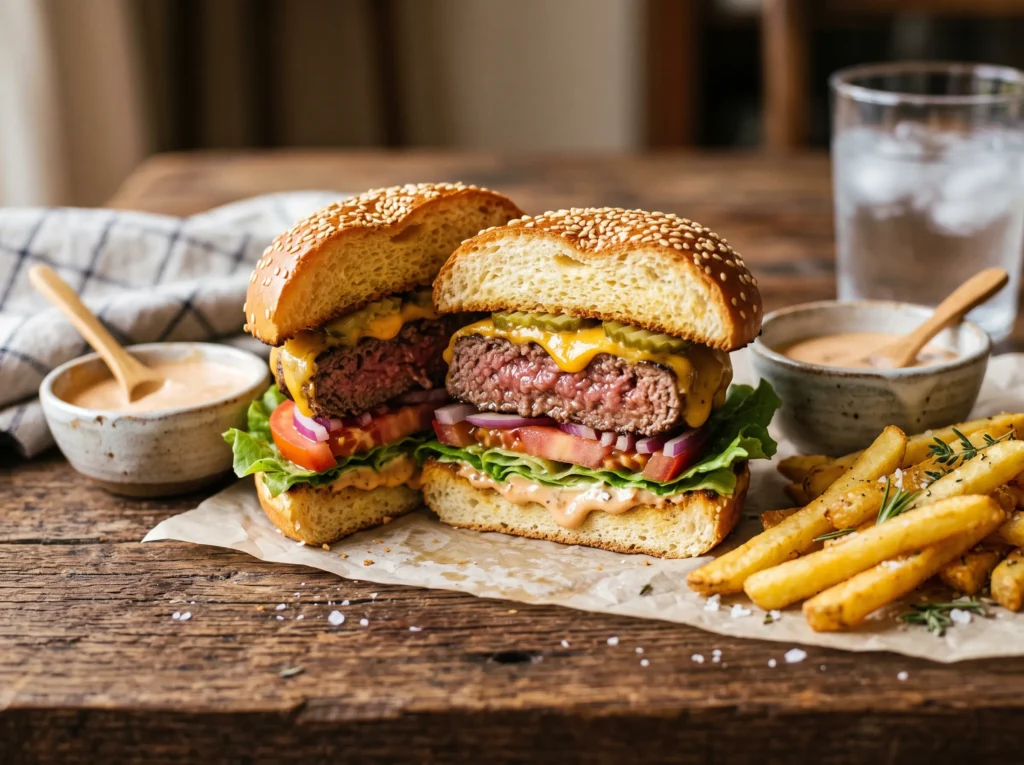
A classic cheeseburger pairs naturally with crispy fries, potato wedges, or a crunchy salad.
For something fresher, serve it with sliced cucumber, tomatoes, and a simple yogurt-based dip.
For a family meal, place all toppings on the table and let everyone customize the burger.
FAQ
What makes a classic cheeseburger juicy?
The fat content of the ground beef, gentle handling, and correct cooking temperature all make a difference.
An 80/20 beef blend provides enough natural fat to keep the patty moist and flavorful.
Should eggs or breadcrumbs be added to burger patties?
No.
Traditional beef burger patties do not need eggs or breadcrumbs. They can be made with ground beef and seasoning alone.
What cheese melts best on a cheeseburger?
Cheddar melts well and provides a rich, slightly sharp flavor.
Other good choices include mozzarella, gouda, or halal-certified American-style cheese slices.
Can ground chicken be used instead of beef?
Yes.
Ground chicken creates a lighter burger, but it is naturally leaner than beef. Handle it gently and avoid overcooking to keep the patty moist.
How thick should a burger patty be?
About 1.5 cm is a good starting point for a standard burger.
The patty should be slightly wider than the bun because it will shrink during cooking.
Why does a burger patty shrink?
Ground beef loses moisture and fat as it cooks, causing the patty to contract.
Starting with a slightly wider patty and making a shallow center indentation can help create a better shape.
Can a Classic Cheeseburger be grilled outdoors?
Yes.
A clean, well-heated outdoor grill works very well. Oil the grates lightly if needed and turn the patties only once when possible.
Can the patties be prepared ahead of time?
Yes.
Shape the patties several hours ahead and keep them covered in the refrigerator until ready to cook.
Season them shortly before placing them on the hot cooking surface.
How can the burger buns stay soft?
Toast the cut sides lightly rather than cooking them until hard.
A short toast creates a lightly crisp surface while keeping the inside of the bun soft.
Is this cheeseburger halal-friendly?
Yes, when halal-certified beef and suitable cheese are used.
Check packaged buns, cheese, mayonnaise, ketchup, mustard, and other sauces for ingredients that do not meet halal requirements.
Conclusion
A homemade cheeseburger does not need complicated ingredients or restaurant-style equipment to taste fantastic.
With juicy seasoned beef, a golden seared crust, melted cheddar, crisp vegetables, and a creamy sauce, this recipe delivers a satisfying burger with every bite.
The process is simple enough for beginners, and the ingredients are flexible enough to suit different tastes.
Keep the toppings fresh, toast the buns lightly, and serve the patties hot for the best combination of textures.
Whether prepared for a quick family dinner or a relaxed weekend meal, this Classic Cheeseburger is an easy recipe worth making again and again.