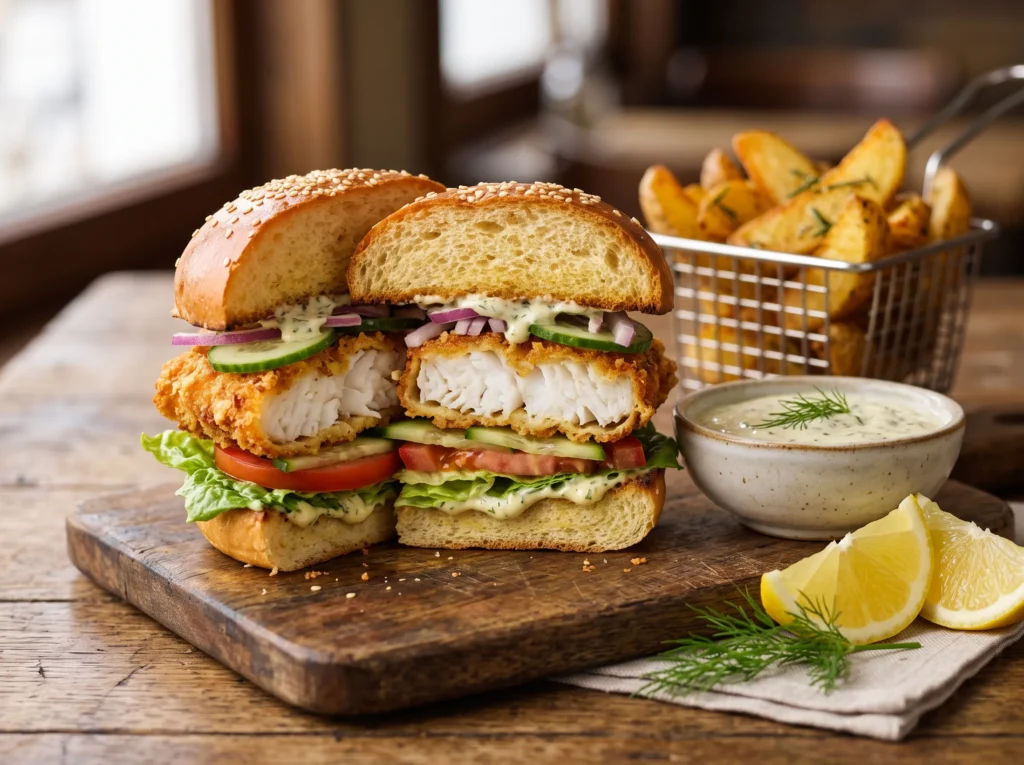
A golden, lightly crispy fish fillet tucked inside a soft toasted bun, layered with crunchy lettuce, juicy tomato, and creamy sauce makes this Crispy Grilled Fish Burger a satisfying homemade meal.
The fish is seasoned with simple pantry spices, grilled until tender, and finished with a deliciously crisp coating. The result is a burger that feels fresh and filling without being complicated.
This recipe is designed for busy home cooks. The ingredients are easy to find, the preparation is straightforward, and the fish cooks quickly.
Serve the burger for lunch, dinner, or a relaxed weekend meal. Add crispy potato wedges, a fresh salad, or a simple yogurt dip for a complete plate.
Ingredients
For the Fish
- 4 white fish fillets, about 120–150 g each
- 1/2 cup panko breadcrumbs
- 2 tablespoons plain all-purpose flour
- 1 large egg
- 1 tablespoon lemon juice
- 1 tablespoon olive oil
- 1/2 teaspoon paprika
- 1/2 teaspoon garlic powder
- 1/2 teaspoon onion powder
- 1/4 teaspoon ground black pepper
- 1/2 teaspoon salt
Cod, haddock, tilapia, pollock, or another firm boneless white fish can be used. Choose fresh fish or fully thawed frozen fillets.
For the Burger Sauce
- 1/3 cup mayonnaise
- 2 tablespoons plain Greek yogurt
- 1 tablespoon lemon juice
- 1 teaspoon honey
- 1/4 teaspoon garlic powder
- Pinch of salt
For the Burgers
- 4 soft burger buns
- 4 lettuce leaves
- 1 large tomato, sliced
- 1/2 small cucumber, thinly sliced
- 1/4 small red onion, thinly sliced
- 4 lemon wedges
For the Pan or Grill
- 1 tablespoon olive oil, for brushing
All ingredients are alcohol-free and can be kept halal-friendly. Check packaged sauces, mayonnaise, breadcrumbs, and buns for any unwanted alcohol-based flavorings or non-halal additives.
Tools and Equipment
- Grill pan, outdoor grill, or heavy nonstick skillet
- Two shallow bowls
- Small mixing bowl
- Tongs or spatula
- Pastry brush
- Plate
- Paper towels
Step-by-Step Instructions
1. Prepare the fish
Pat the fish fillets dry with paper towels.
Removing excess moisture helps the seasoning and coating stick better. It also encourages the fish to develop a lightly crisp exterior while cooking.
2. Season the fish
In a shallow bowl, combine the flour, paprika, garlic powder, onion powder, black pepper, and salt.
Lightly coat each fish fillet in the seasoned flour. Shake off any excess.
3. Prepare the egg coating
Crack the egg into a second shallow bowl.
Add the lemon juice and whisk until smooth.
Dip each floured fish fillet into the egg mixture. Turn it gently so both sides are covered.
4. Add the crispy coating
Place the panko breadcrumbs on a clean plate.
Press each egg-coated fillet into the breadcrumbs. Make sure the crumbs cover both sides without creating an overly thick layer.
Press gently so the coating stays attached during grilling.
5. Make the sauce
Add mayonnaise, Greek yogurt, lemon juice, honey, garlic powder, and a pinch of salt to a small bowl.
Stir until creamy and smooth.
Taste and adjust the lemon juice or salt if needed. Keep the sauce chilled while preparing the fish.
6. Heat the grill
Preheat a grill pan, outdoor grill, or heavy skillet over medium heat.
Lightly brush the cooking surface with olive oil.
The surface should be hot before the fish goes on. A properly heated pan helps the coating become golden without absorbing too much oil.

7. Grill the fish
Place the coated fish fillets onto the hot cooking surface.
Cook for about 4 to 5 minutes on the first side, depending on the thickness of the fillets.
Avoid moving the fish too much while it cooks. This helps the coating stay intact.
8. Flip carefully
Use a wide spatula or tongs to turn the fish.
Cook the second side for another 3 to 5 minutes, until the coating is golden and the fish is opaque and cooked through.
The exact cooking time depends on the thickness and type of fish.
For food safety, the thickest part should reach 63°C (145°F) when checked with a food thermometer.
9. Toast the buns
While the fish finishes cooking, cut the burger buns in half.
Place the cut sides on the grill or pan for about 30 to 60 seconds.
Toast until lightly golden and warm. Do not over-toast them because the buns should remain soft enough to bite through easily.
10. Build the burgers
Spread a generous spoonful of the creamy sauce over the bottom half of each toasted bun.
Add lettuce, followed by the grilled fish fillet.
Top with tomato, cucumber, and red onion.
Add another small spoonful of sauce if desired, then place the top bun over the vegetables.
11. Serve immediately
Serve the burgers while the fish is warm and crisp.
Add a lemon wedge on the side for a bright squeeze of citrus just before eating.
Tips & Variations
Choose the right fish
Firm white fish works especially well for burgers.
Cod provides a mild flavor and flaky texture. Tilapia is softer and cooks quickly, while haddock has a slightly richer taste.
The most important factor is thickness. Very thin fillets can overcook quickly, while thick pieces need more time.
Pat the fish dry
This small step makes a big difference.
Wet fish can cause the flour and breadcrumbs to slide off. Drying the fillets first helps create a more even coating.
Press the breadcrumbs firmly
A loose coating can fall away during grilling.
Gently press the panko onto the fish after dipping it in the egg. Do not squeeze the fillet hard, but make sure the breadcrumbs make good contact.
Keep the heat moderate
A very hot grill can burn the breadcrumbs before the fish is cooked.
Medium heat allows the coating to become golden and crisp while the inside stays moist and tender.
Do not flip too often
Repeated flipping can break the coating.
Let the first side cook until it is golden and firm enough to release from the cooking surface. Then turn it once and finish cooking.
Make it extra crispy
For a crunchier crust, use panko breadcrumbs rather than fine breadcrumbs.
Panko creates larger, lighter crumbs that become pleasantly crisp during cooking.
A small amount of olive oil brushed over the coating before grilling can also improve browning.
Make a spicy fish burger
Add 1/4 teaspoon chili powder or a pinch of cayenne pepper to the seasoned flour.
For extra heat, mix a little chili sauce into the burger sauce. Choose an alcohol-free, halal-friendly sauce and check the ingredient label.
Make it fresh and tangy
Add thinly sliced cucumber and red onion for extra crunch.
A few slices of pickled cucumber can also add a sharp, refreshing contrast to the creamy sauce.
Use a yogurt-based sauce
For a lighter sauce, increase the Greek yogurt and reduce the mayonnaise.
A mixture of Greek yogurt, lemon juice, garlic, salt, and a little honey makes a creamy sauce with a fresh tang.
Try a different bun
Soft brioche-style buns can add a rich, slightly sweet flavor.
For a more wholesome option, use whole-wheat burger buns. Sesame buns also pair nicely with the crispy fish.
Always check packaged buns for alcohol-based flavorings or ingredients that do not fit halal requirements.
Add cheese
A slice of mild cheddar or mozzarella can be added while the fish is still hot.
Allow it to soften slightly before assembling the burger. A mild cheese works best because it does not overpower the delicate fish.
Add avocado
Creamy avocado provides a rich contrast to the crispy fish.
Use a few thin slices rather than a large amount so the burger does not become difficult to handle.
Avoid soggy burgers
Do not add wet toppings too far in advance.
Assemble the burgers just before serving, especially if using tomatoes, pickles, or extra sauce. This keeps the bun soft but prevents it from becoming soggy.
Do not overcrowd the pan
If the fish fillets are packed closely together, steam can build up.
Cook in batches if necessary. Giving each fillet enough space helps the coating brown properly.
Common mistakes to avoid
Using frozen fish without thawing it completely can lead to uneven cooking.
Skipping the drying step can make the coating slide off.
Cooking over very high heat can burn the crust while leaving the center undercooked.
Another common mistake is using too much sauce. A generous layer adds creaminess, but too much can hide the crispy texture of the fish.
Storage & Serving
How to store leftover fish
For the best texture, store the cooked fish separately from the buns and fresh toppings.
Place the cooled fish in an airtight container and refrigerate within 2 hours of cooking.
Use refrigerated cooked fish within 3 days.
How to store assembled burgers
Fully assembled burgers are best eaten immediately.
If a burger has already been assembled, wrap it tightly and refrigerate it, but expect the bun and coating to soften.
Can the cooked fish be frozen?
Yes. Allow the cooked fish to cool completely, then place it in a freezer-safe container.
Separate pieces with parchment paper to prevent them from sticking together.
For the best quality, use frozen cooked fish within 1 month.
How to reheat the fish
An oven, air fryer, or skillet is better than a microwave when keeping the coating crisp.
Reheat until the fish is piping hot throughout. Avoid overheating because fish can become dry.
Best side dishes
Crispy fish burgers pair beautifully with simple sides.
Try potato wedges, sweet potato fries, cucumber salad, coleslaw, corn, or a fresh green salad.
Make it a family meal
Set out the burger buns, lettuce, tomato, cucumber, onion, sauce, and lemon wedges separately.
Each person can build a burger with the toppings they like. This makes the meal especially easy for families with different preferences.
FAQ
What is the best fish for a grilled fish burger?
Firm white fish such as cod, haddock, pollock, or tilapia works well.
Choose boneless fillets with a fairly even thickness so they cook at a similar rate.
Can frozen fish be used?
Yes. Frozen fish works well as long as it is fully thawed before cooking.
Pat it thoroughly dry after thawing to remove excess moisture.
Can this recipe be made without breadcrumbs?
Yes. The fish can be grilled with just the seasoned flour coating.
The result will be less crunchy, but it will still be flavorful and tender.
Can regular breadcrumbs replace panko?
Yes.
Regular breadcrumbs create a finer crust, while panko gives the burger a more noticeable crunch. Both can be used successfully.
Can the fish be cooked in an air fryer?
Yes.
Place the coated fish in a lightly oiled air fryer basket and cook at around 200°C (400°F), turning carefully halfway through. Cooking time varies with the thickness of the fillets.
How can the fish stay moist?
Avoid overcooking the fillets.
Use medium heat and check the thickest part with a food thermometer. Once the fish reaches 63°C (145°F), remove it from the heat.
What sauce goes best with a fish burger?
A creamy lemon sauce works especially well.
Mayonnaise combined with Greek yogurt, lemon juice, garlic, and a little honey gives the burger a rich, tangy flavor without overpowering the fish.
Can the fish be prepared ahead?
The seasoned and coated fish can be prepared shortly before cooking.
For the best crisp texture, cook it close to serving time rather than leaving the coated fish for many hours.
Is this fish burger halal-friendly?
Yes, the recipe uses fish and other naturally halal-friendly ingredients.
Check packaged products such as mayonnaise, buns, breadcrumbs, and sauces to make sure they contain no alcohol or other unsuitable ingredients.
Can the burger be made without mayonnaise?
Yes.
Use plain Greek yogurt as the main sauce ingredient. Add lemon juice, garlic powder, salt, and a small amount of honey for flavor.
Conclusion
This Crispy Grilled Fish Burger brings together everything a good homemade burger needs: tender fish, a golden crunchy coating, fresh vegetables, soft toasted buns, and a creamy lemon sauce.
The preparation is simple enough for beginners, while the finished burger feels special enough for a relaxed weekend dinner.
Fresh toppings add juicy crunch, while the warm fish provides a satisfying contrast against the cool, creamy sauce.
Serve the burger immediately for the best crispy texture, add a squeeze of lemon, and enjoy a flavorful seafood meal without complicated preparation.
This Grilled Fish Burger is an easy recipe to keep handy whenever a quick, satisfying homemade dinner is on the menu.