Lasagna soup takes everything people actually love about lasagna — the seasoned beef and sausage, the rich tomato sauce, the soft pasta, the melted cheese — and puts it in a pot instead of a baking dish. No layering, no boiling noodles separately, no waiting for a casserole to bake and rest. The lasagna sheets are broken by hand and cooked directly in the broth, so they soak up flavor as they soften.
The result is thicker than a standard soup and lighter than baked lasagna: a deeply savory tomato broth with ruffled pasta edges, wilted spinach, and mozzarella stirred in at the very end so it stays stringy instead of disappearing. A spoonful of seasoned ricotta on top brings back the last thing you’d miss from the original. It’s a one-pot weeknight dinner that takes about 30 minutes start to finish.
Recipe at a Glance
- Prep Time: 10 minutes
- Cook Time: 20 minutes
- Total Time: 30 minutes
- Servings: 4
- Difficulty: Easy
- Cuisine: Italian-American
- Category: Dinner, Soup, One-Pot Meal
Why You’ll Love This Recipe
- One pot, start to finish. The meat browns, the broth simmers, and the pasta cooks in the same Dutch oven. There is no colander and no baking dish to wash.
- Faster than lasagna by a wide margin. Traditional lasagna needs sauce, assembly, roughly an hour in the oven, and a resting period. This is done in about half an hour.
- The pasta absorbs the broth. Cooking the noodles directly in the tomato broth seasons them from the inside instead of leaving them bland.
- Flexible with what’s in the fridge. Ground beef, pork, chicken, or turkey all work, and so does almost any short pasta shape.
- It reheats well. The base freezes cleanly if you keep the noodles and cheese out until serving.
Ingredients
For the soup base
- 1/2 lb ground beef (85/15)
- 1/2 lb Italian sausage, casings removed
- Kosher salt, to taste
- 1/2 yellow onion, diced
- 3 garlic cloves, minced
- 3 tablespoons tomato paste
- 1 1/2 teaspoons ground oregano
- Pinch of crushed red pepper
- 3/4 cup marinara sauce
- 4 cups chicken broth
To finish
- 5 oz lasagna sheets, broken into 1–2 inch pieces
- 1/4 cup heavy cream
- 1/2 cup shredded Parmigiano-Reggiano, plus extra for serving
- 1 1/2 cups fresh baby spinach
- 3/4 cup shredded mozzarella
- Fresh basil, to garnish
Optional ricotta topping
- 1/2 cup ricotta
- Pinch of kosher salt
- Pinch of crushed red pepper
- 1 teaspoon minced parsley
A note on a few ingredients: The 85/15 ground beef matters here — leaner beef gives you less rendered fat to carry the tomato paste and aromatics. The tomato paste is not optional filler; cooking it briefly in the hot fat is what gives the broth its depth. And use mozzarella you shred yourself if you can, since pre-shredded cheese is coated in anti-caking starch that makes it melt grainy rather than stretchy.
Equipment
- Large Dutch oven or heavy soup pot (at least 5 quarts)
- Wooden spoon or spatula
- Ladle
- Box grater, if shredding your own cheese
Step-by-Step Instructions
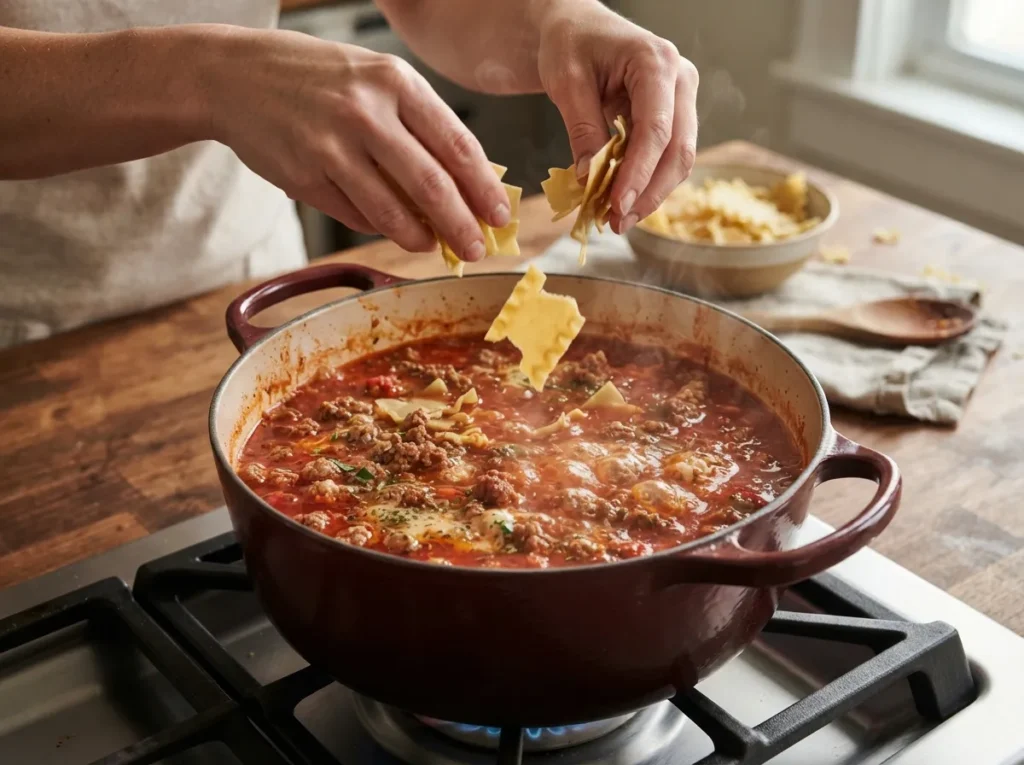
- Brown the meat. Set a Dutch oven over medium-low heat and add the ground beef and Italian sausage with a few pinches of kosher salt. Break the meat into small crumbles as it cooks. After about 5 minutes, when the meat is roughly halfway cooked and still has pink showing, move to the next step.
- Add the aromatics. Stir in the diced onion and minced garlic. Cook about 3 more minutes, until the onion turns translucent and soft at the edges and the garlic smells fragrant. The meat should finish browning during this time.
- Cook the tomato paste. Stir in the tomato paste and cook for about 1 minute, scraping it across the bottom of the pot. It will darken from bright red to a deeper brick color — that’s the flavor developing. Add the oregano and crushed red pepper and stir once more.
- Build the broth. Pour in the marinara sauce and chicken broth. Scrape the bottom of the pot to lift any browned bits, then bring everything to a gentle simmer with small bubbles breaking the surface.
- Cook the pasta in the broth. Break the lasagna sheets by hand into rough 1–2 inch pieces and add them to the simmering pot. Cook 10 to 12 minutes, stirring every couple of minutes so the flat pieces don’t stick to each other or to the bottom. They’re ready when the pasta is tender but still has a slight bite. Taste and adjust the salt now — the broth will taste flat until it’s properly seasoned.
- Add the cream, Parmesan, and spinach. Pour in the heavy cream, add the Parmigiano-Reggiano and the baby spinach, and cook about 1 minute, just until the spinach collapses into the broth and turns deep green. The soup will turn from bright red to a slightly deeper, richer color.
- Finish with mozzarella. Turn off the heat and stir in the shredded mozzarella last. It should melt into soft strands that pull when you lift the spoon — if you add it too early or over high heat, it seizes into clumps instead.
- Serve. Ladle into bowls and top with extra grated Parmesan and torn basil. For the ricotta topping, stir the ricotta with a pinch of salt, crushed red pepper, and minced parsley, then spoon a dollop onto each bowl.
Tips for the Best Lasagna Soup
- Break the noodles unevenly on purpose. Ragged 1–2 inch pieces catch the broth better and give you the ruffled edges that make it read as lasagna rather than generic pasta soup.
- Stir more often than you would with other soups. Flat pasta pieces are far more likely to stick together than short shapes. A stir every two minutes is enough.
- Season at the end, not the beginning. Marinara, broth, sausage, and Parmesan all carry salt, and the amount varies a lot by brand. Taste once the pasta is cooked and adjust from there.
- Take the pot off the heat before the mozzarella goes in. Residual heat is enough to melt it, and it protects the stretch.
- Serve it promptly. The pasta keeps absorbing liquid as it sits, so the soup thickens noticeably within about 15 minutes of cooking.
Common Mistakes
- Boiling instead of simmering. A hard boil tears the lasagna pieces apart and clouds the broth. Keep it at a gentle simmer once the liquid goes in.
- Skipping the tomato paste step. Dumping the paste in with the broth instead of cooking it in the fat first leaves the soup tasting thin and slightly raw.
- Adding mozzarella over active heat. This is the single most common reason the cheese turns into rubbery clumps instead of stretching.
- Overcooking the pasta. Pulling it at al dente matters more here than in a drained pasta dish, because the noodles continue to soften in the hot broth in the bowl.
- Using pre-shredded mozzarella. It works in a pinch, but the starch coating dulls the melt and can leave a slightly gritty texture.
Substitutions
- Meat: Ground pork, chicken, or turkey all work in place of the beef and sausage. Leaner meats give a cleaner broth, so you may want to add a spoonful of olive oil when browning.
- Vegetarian: Swap the meat for a pound of diced cremini mushrooms, browned well, or use a plant-based ground. Use vegetable broth in place of chicken broth.
- Pasta: Ziti, penne, rigatoni, or mafalda all work. Follow the package cook time rather than the 10–12 minute window, since shapes vary.
- Cream: Half-and-half works with a slightly thinner result. You can also leave the cream out entirely for a brighter, more tomato-forward soup.
- Spinach: Chopped kale works, though it needs 3 to 4 minutes rather than 1 minute to soften.
- Heat level: Hot Italian sausage in place of sweet will raise the heat considerably; drop the crushed red pepper if you do.
Storage and Reheating
Refrigerator: Cool the soup and refrigerate it within two hours of cooking. Stored in an airtight container, leftovers keep for 3 to 4 days. The pasta will absorb a good deal of the broth overnight, so the soup will be considerably thicker the next day — loosen it with a splash of broth or water when reheating.
Freezer: Freeze the base only. Make the soup through the broth stage and leave out the pasta, spinach, and mozzarella, then freeze in portions for up to 3 months. Lasagna noodles turn mushy after freezing and thawing, which is the main thing that spoils this dish as a leftover. When you’re ready to eat, thaw the base, bring it back to a simmer, cook the pasta fresh in it, then finish with the spinach and cheese.
Reheating: Warm gently on the stovetop over medium-low heat, stirring occasionally, until the soup is steaming hot throughout and reaches 165°F. A microwave works for single bowls; stir halfway through so it heats evenly. Add a little extra mozzarella at the end if you want the cheese pull back.
Serving Suggestions
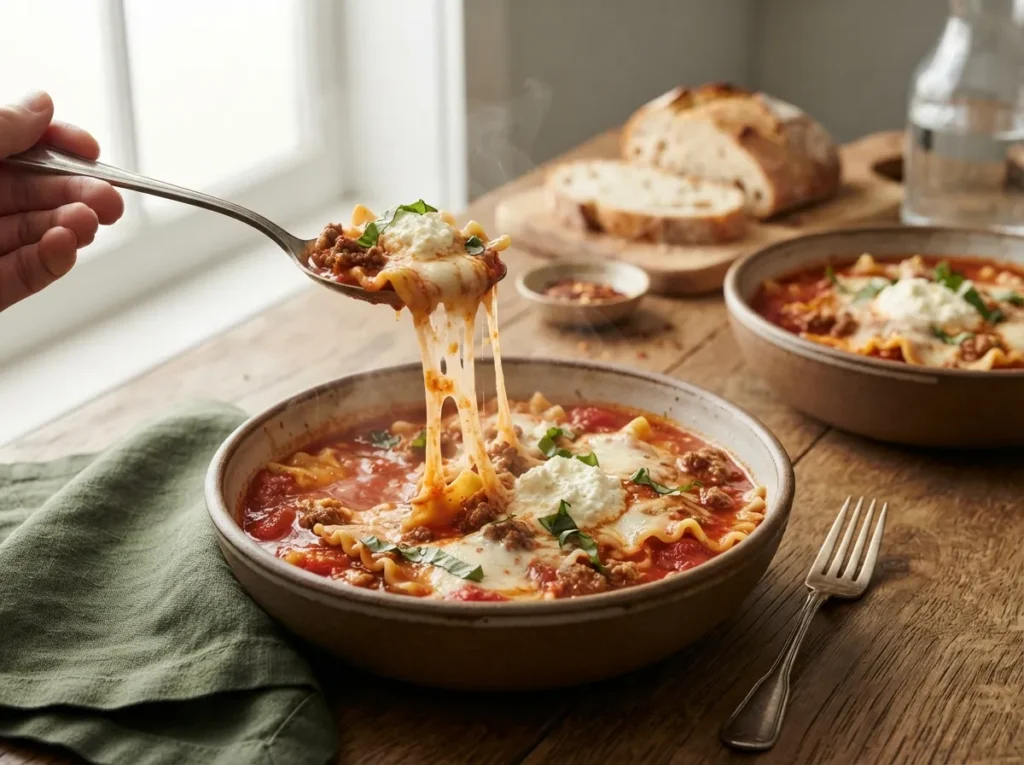
- Garlic bread or a crusty baguette, for dragging through the broth
- A simple green salad with a sharp vinaigrette to cut the richness
- Shaved Brussels sprout or kale salad, which holds up well next to a heavy bowl
- Extra Parmesan and a small bowl of the seasoned ricotta on the table so everyone tops their own
- Roasted broccoli or green beans if you want a hot vegetable alongside
Frequently Asked Questions
Can I use no-boil lasagna noodles?
Yes, and they work well here since they’re designed to hydrate in liquid. They soften faster than regular sheets, so start checking at around 7 minutes.
Why did my soup get so thick?
The pasta keeps drinking up broth after the pot comes off the heat. This is normal. Thin it with additional broth or water to the consistency you want, and taste again afterward since the extra liquid will dilute the seasoning.
Can I make lasagna soup ahead of time?
The base can be made a day or two ahead and refrigerated. Cook the pasta fresh when you reheat it rather than storing the noodles in the broth, which keeps the texture much closer to freshly made.
Do I need the ricotta?
No, the soup is complete without it. It’s worth adding if you want the dish to taste more distinctly like layered lasagna, since ricotta is the flavor most people associate with the baked version.
Can I make this in a slow cooker?
You can cook the meat, aromatics, and broth in a slow cooker on low for several hours, but add the pasta only in the final 20 to 30 minutes and stir in the cheeses after switching it off. Pasta left in a slow cooker for hours breaks down completely.
What size pot should I use?
A 5-quart Dutch oven or larger. The pot needs enough room for 4 cups of broth plus the pasta with space to stir without splashing.
Final Thoughts
Lasagna soup earns its place in a weeknight rotation because it delivers a genuinely satisfying result for about 30 minutes of easy work. Get the tomato paste properly cooked, pull the pasta at al dente, and add the mozzarella off the heat, and the rest is hard to get wrong.