Juicy smoked turkey breast is a delicious way to enjoy tender, flavorful turkey with a beautiful smoky aroma and a golden-brown exterior. Seasoned with a simple blend of herbs, spices, and oil or butter, this recipe creates moist turkey that is perfect for family dinners, holiday meals, weekend cookouts, and meal preparation.
Smoking turkey breast at a steady temperature allows the meat to absorb smoky flavor while cooking gently. The result is tender meat that slices beautifully and pairs well with roasted vegetables, mashed potatoes, fresh salads, and homemade gravy.
This recipe uses easy-to-find ingredients and straightforward cooking steps. A reliable meat thermometer helps ensure the turkey reaches a safe internal temperature without becoming dry. Whether using a pellet smoker, electric smoker, or charcoal smoker, the same basic method can produce delicious results.
Why You Will Love This Juicy Smoked Turkey Breast
Tender and juicy meat: A simple preparation method, moderate smoking temperature, and careful temperature monitoring help preserve moisture.
Rich smoky flavor: Wood smoke adds depth to the turkey without overpowering its natural taste.
Easy seasoning: Garlic, paprika, black pepper, herbs, and butter create a flavorful crust using everyday pantry ingredients.
Perfect for many occasions: Serve it for holiday dinners, family gatherings, summer cookouts, or a special weekend meal.
Great for leftovers: Sliced smoked turkey works well in sandwiches, wraps, salads, and rice bowls.
Easy to customize: Adjust the herbs, spices, and wood type to suit different flavor preferences.
Recipe Overview
- Prep Time: 15 minutes
- Optional Dry-Brining Time: 8–24 hours
- Cook Time: Approximately 2–3 hours, depending on size and smoker temperature
- Resting Time: 15–20 minutes
- Total Active Time: Approximately 2 hours 30 minutes to 3 hours 30 minutes
- Servings: 6
- Cooking Method: Smoking
- Smoker Temperature: 250°F (121°C)
- Target Internal Temperature: 165°F (74°C) in the thickest part of the breast
Cooking times are estimates. The turkey’s internal temperature, rather than the clock, determines when it is safely cooked.
Ingredients for Juicy Smoked Turkey Breast
This recipe makes approximately six servings using one boneless or bone-in turkey breast weighing about 3–4 pounds (1.4–1.8 kg). Bone-in turkey may take longer to cook.
Main Ingredients
- 1 turkey breast, 3–4 pounds (1.4–1.8 kg), fully thawed
- 2 tablespoons olive oil or softened unsalted butter
- 1 tablespoon kosher salt, adjusted for the turkey’s size and whether it is already salted
- 2 teaspoons smoked paprika
- 2 teaspoons garlic powder
- 1 teaspoon onion powder
- 1 teaspoon freshly ground black pepper
- 1 teaspoon dried thyme
- 1 teaspoon dried rosemary, crushed
- 1 teaspoon brown sugar, optional
- ½ teaspoon ground mustard, optional
Optional Dry Brine
- 1 teaspoon additional kosher salt per 3–4 pounds of turkey only if needed based on the amount of salt already included in the main seasoning
A dry brine can improve seasoning and moisture retention. However, many commercially packaged turkey breasts are already injected with a salt solution or labeled as enhanced, basted, or self-basting. Check the packaging before adding extra salt. If the turkey is already salted, reduce or omit the salt in the rub.
For the Smoker
- Mild fruitwood or other suitable smoking wood, such as apple or cherry
- Water for the smoker’s water pan, if the smoker uses one
Applewood gives the turkey a mild, slightly sweet smoky flavor. Cherrywood adds a deeper color and gentle fruitiness. Hickory can be used sparingly for a stronger smoke flavor.
Equipment Needed
- Smoker or covered charcoal grill suitable for indirect cooking
- Reliable instant-read meat thermometer
- Small mixing bowl
- Measuring spoons
- Paper towels
- Food-safe tray or plate
- Tongs or heat-resistant gloves
- Cutting board
- Sharp carving knife
- Aluminum foil, if needed for resting
A thermometer is especially important because turkey breast is lean and can become dry when overcooked. A smoker’s built-in temperature display measures the cooking chamber, not necessarily the temperature inside the meat.
How to Make Juicy Smoked Turkey Breast
Step 1: Thaw and Prepare the Turkey
If the turkey breast is frozen, thaw it safely in the refrigerator before cooking. A large frozen breast may require a day or longer to thaw completely, depending on its size.
Remove the packaging and check whether the turkey includes a gravy packet or other items. Remove them if present. Do not rinse raw turkey, as splashing water can spread harmful bacteria around the kitchen.
Pat the turkey dry with paper towels. Drying the surface helps the oil or butter and seasoning adhere evenly.
If the breast has loose skin, gently separate it from the meat where possible without tearing it. This allows some of the seasoning and butter to reach the surface of the meat.
Wash hands, utensils, and surfaces that have contacted raw turkey before handling other ingredients.
Step 2: Dry-Brine for Better Flavor (Optional)
For deeper seasoning, apply the appropriate amount of salt evenly over the turkey breast. Place it on a tray and refrigerate uncovered for 8–24 hours, provided the turkey is not already salt-enhanced.
Keep the turkey refrigerated at 40°F (4°C) or below throughout the dry-brining process.
Dry-brining seasons the meat more evenly than simply sprinkling salt on the outside just before cooking. It also helps the surface dry, which can improve browning.
If skipping this step, continue directly to the seasoning stage. The recipe still produces flavorful turkey without an overnight rest.
Step 3: Mix the Seasoning Rub
Add the smoked paprika, garlic powder, onion powder, black pepper, thyme, rosemary, brown sugar if using, and ground mustard if using to a small bowl.
Stir until the spices and herbs are evenly combined.
The paprika gives the turkey a warm color, while garlic and onion powder provide savory depth. Thyme and rosemary contribute a classic roasted-herb flavor that complements the natural taste of turkey.
Taste the dry mixture only if it contains no raw meat contact and has not been contaminated. Remember that the final salt level depends on the turkey’s original preparation and the amount of salt used during dry-brining.
Step 4: Coat the Turkey Breast
Rub the turkey breast with olive oil or softened unsalted butter. Spread it over all exposed surfaces, including under the skin when possible.
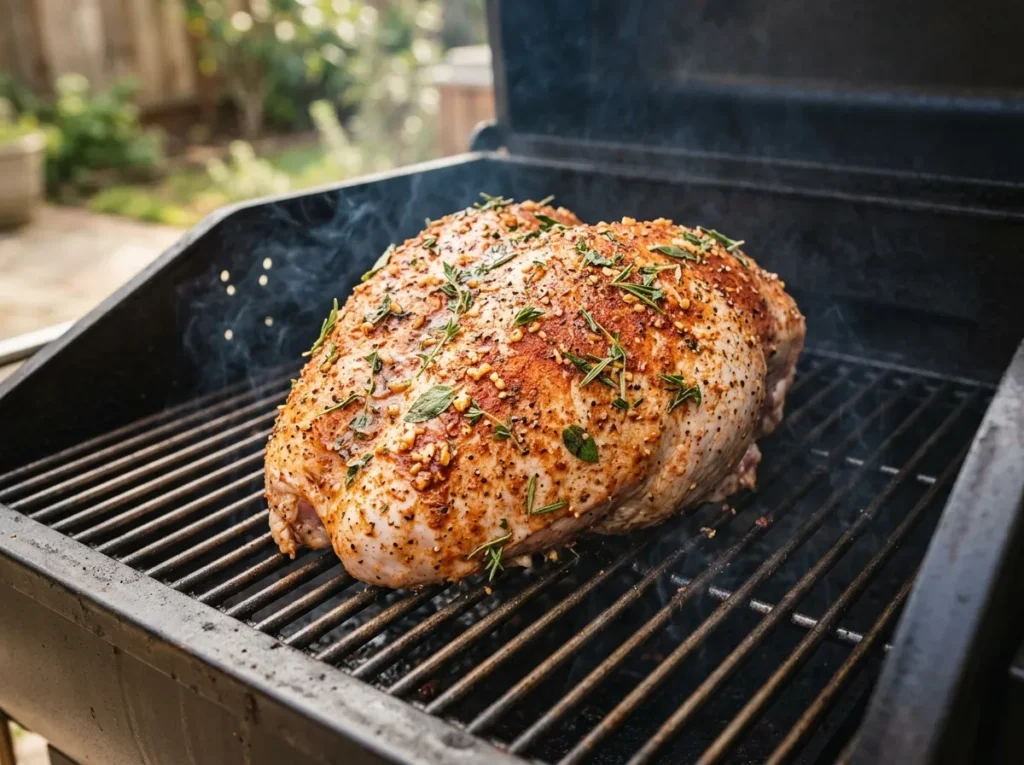
Sprinkle the seasoning mixture evenly over the breast. Gently press the rub onto the surface so it sticks.
For a more even result, season both sides rather than concentrating all the spices on top. If the breast is tied with butcher’s twine, leave the twine in place during smoking if it is designed for cooking.
The oil or butter helps the spices adhere and encourages a flavorful exterior. Avoid using too much oil, as a thin coating is enough.
Step 5: Preheat the Smoker
Preheat the smoker to 250°F (121°C). Add the smoking wood according to the manufacturer’s instructions.
Choose applewood or cherrywood for a mild, balanced flavor. If using wood chips, chunks, pellets, or a charcoal setup, follow the smoker’s instructions for the appropriate fuel and placement.
Allow the smoker to stabilize at the target temperature before adding the turkey. A stable cooking temperature supports even cooking and helps prevent the outside from drying before the center is ready.
If the smoker has a water pan, add water as directed. A water pan can help stabilize the cooking environment, although it does not replace proper temperature monitoring.
Step 6: Place the Turkey in the Smoker
Place the seasoned turkey breast on the smoker grate with the skin side facing up if it has skin. Position the thickest portion where heat circulation is even, avoiding direct flame or intense hot spots.
Close the lid and allow the turkey to smoke.
Avoid opening the smoker repeatedly. Every time the lid opens, heat escapes and cooking may take longer.
For more reliable results, insert a leave-in probe thermometer into the thickest part of the breast. The probe should not touch bone if the turkey is bone-in.
Step 7: Smoke Until Nearly Cooked
Smoke the turkey at 250°F (121°C) until the thickest part approaches 160°F (71°C), then monitor it closely as it finishes cooking.
A 3–4-pound breast may take approximately 2–3 hours, but the exact time varies with the shape of the breast, whether it has bones, the starting temperature, the smoker’s accuracy, and outdoor conditions.
The outside should develop a rich golden-brown to mahogany color, and the meat should smell savory and smoky.
If the surface becomes darker than desired before the inside is ready, loosely cover the breast with foil to reduce further browning.
Do not rely on color, juices, or estimated cooking time to determine whether turkey is safe to eat. Use a food thermometer.
Step 8: Check the Internal Temperature
Check the thickest part of the turkey breast with an instant-read thermometer. For a bone-in breast, take care not to touch the bone, which can give an inaccurate reading.
Turkey breast must reach an internal temperature of 165°F (74°C) for food safety. If any measured area remains below this temperature, continue cooking and check again.
Remove the breast from the smoker once it reaches 165°F (74°C).
Do not depend on resting or carryover cooking to bring undercooked turkey to a safe temperature. Verify that it has reached the required temperature before serving.
Step 9: Rest the Turkey Breast
Transfer the cooked turkey to a clean cutting board or serving platter. Rest it for 15–20 minutes before slicing.
Resting allows the juices to settle and makes the meat easier to carve. Loosely tenting the turkey with foil can help keep it warm, but wrapping it tightly may soften the exterior.
Keep the turkey in a safe temperature range while resting, and avoid leaving it at room temperature for more than two hours in total, or more than one hour when the surrounding temperature is above 90°F (32°C).
Step 10: Slice and Serve
Use a sharp carving knife to slice the turkey breast across the grain into even slices. Cutting across the grain shortens the muscle fibers and helps each slice feel more tender.
Arrange the slices on a warm serving platter. Spoon any clean resting juices over the meat if desired.
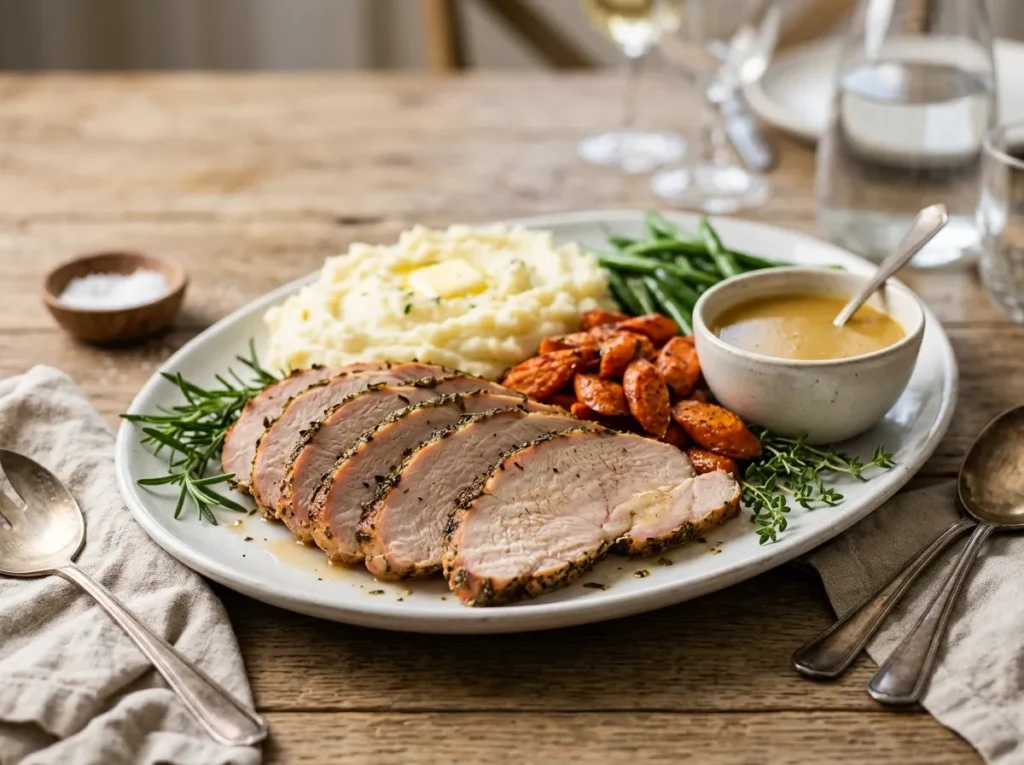
Serve immediately with your favorite side dishes, gravy, or sauce. The finished turkey should have a smoky exterior, tender slices, and a moist texture throughout.
Tips for the Juiciest Smoked Turkey Breast
Choose the right turkey breast. A fresh or fully thawed breast cooks more predictably than one with a frozen center. Check the label for added salt or brine before seasoning.
Use a thermometer. This is the most dependable way to avoid undercooking or drying out the meat.
Keep the smoker temperature steady. A target of 250°F (121°C) provides a useful balance between smoke exposure and cooking time.
Avoid excessive smoke. Clean, moderate smoke creates a pleasant flavor. Heavy, dirty smoke can leave a bitter coating on the turkey.
Season evenly. Distributing the rub over the entire surface gives each slice balanced flavor.
Do not skip the rest. Allowing the meat to rest before carving helps keep the cutting board from collecting too much juice.
Slice only what is needed. Keeping the remaining breast in a larger piece helps it retain moisture during storage.
Be careful with added salt. Some packaged turkey breasts are already seasoned or injected with a saline solution. Adjust the rub to prevent the finished meat from becoming too salty.
Flavor Variations
Garlic Herb Smoked Turkey
Use softened butter instead of olive oil and increase the dried thyme slightly. Add a little finely chopped fresh parsley after cooking for a fresh herbal finish.
Sweet and Smoky Turkey
Include the optional brown sugar in the seasoning mixture. The sugar adds mild sweetness and helps the surface develop a deeper color. Watch the exterior carefully, as sugar can darken quickly.
Cajun-Style Smoked Turkey
Replace the rosemary and thyme with a Cajun-style seasoning blend. Check the salt content of the blend before adding extra salt.
Lemon Pepper Turkey
Use lemon pepper seasoning in place of some of the black pepper. Add a small amount of lemon zest to the butter or oil for a bright citrus note.
Spicy Smoked Turkey
Add ¼–½ teaspoon of cayenne pepper to the rub. Adjust the amount according to the preferred heat level.
Butter-Basted Turkey
For a richer finish, brush a small amount of melted unsalted butter over the turkey during the final part of cooking. Use a clean utensil and avoid repeated opening of the smoker. Butter can soften the skin, so skip basting if a drier, firmer exterior is preferred.
What to Serve with Smoked Turkey Breast
Smoked turkey breast pairs well with classic comfort foods and fresh sides. Choose a combination of vegetables, starches, and sauces to create a balanced meal.
- Mashed potatoes: Creamy potatoes complement the smoky, savory turkey.
- Roasted vegetables: Carrots, potatoes, broccoli, or green beans add color and texture.
- Macaroni and cheese: A creamy pasta side makes the meal more filling.
- Fresh green salad: Leafy greens with a lemon dressing provide a refreshing contrast.
- Cornbread: A slightly sweet side pairs nicely with the smoky flavor.
- Rice pilaf: Seasoned rice works well for a simple family dinner.
- Cranberry sauce: Its sweet-tart flavor balances the savory turkey.
- Homemade gravy: Use suitable turkey stock and cooking juices to make a rich sauce.
- Grilled corn: Corn adds a sweet, summery element to an outdoor meal.
For a lighter plate, serve the turkey with roasted vegetables and a fresh salad. For a holiday-style dinner, combine mashed potatoes, gravy, and a vegetable side.
Storage Instructions
Allow leftovers to cool slightly, then refrigerate them promptly in shallow, airtight containers. Refrigerate cooked turkey within two hours of cooking, or within one hour if the ambient temperature is above 90°F (32°C).
Store cooked turkey in the refrigerator at 40°F (4°C) or below and use it within 3–4 days.
For longer storage, freeze sliced or whole portions in freezer-safe airtight packaging. Label the container with the date. For best quality, use frozen cooked turkey within approximately 2–6 months.
Whenever possible, store the turkey in larger pieces rather than slicing the entire breast in advance. Larger pieces generally retain moisture better.
Do not leave cooked turkey sitting out overnight, and discard leftovers that have been held at unsafe temperatures for too long.
How to Reheat Smoked Turkey Breast Without Drying It Out
Oven Method
- Preheat the oven to 300°F (149°C).
- Place the turkey slices in an oven-safe dish.
- Add a small splash of turkey stock, broth, or water.
- Cover the dish with foil to reduce moisture loss.
- Heat until the turkey reaches 165°F (74°C) throughout.
The exact time depends on the thickness and quantity of the slices. Check the temperature instead of relying only on the clock.
Skillet Method
- Place sliced turkey in a skillet over low to medium-low heat.
- Add a tablespoon or two of broth or water.
- Cover the skillet and heat gently, turning the slices as needed.
- Continue until the turkey reaches 165°F (74°C).
Avoid prolonged high heat, which can make lean turkey tough.
Microwave Method
- Place turkey slices in a microwave-safe dish.
- Add a small amount of broth or water.
- Cover with a microwave-safe lid, leaving a vent if necessary.
- Heat in short intervals, turning or rearranging the slices for even heating.
- Check several spots to ensure the turkey reaches 165°F (74°C).
Reheat only the portion needed whenever possible. Repeated heating and cooling can reduce quality and increase food-safety risks.
Common Mistakes to Avoid
Cooking by time alone: Turkey breasts vary in thickness and shape. Always use a thermometer to confirm doneness.
Adding too much salt: Enhanced or pre-brined turkey can become overly salty when heavily seasoned.
Using too much smoke wood: Excessive smoke may make the turkey taste bitter. Start with a moderate amount and follow the smoker’s guidance.
Smoking at an excessively high temperature: Very high heat can dry the exterior before the center cooks evenly.
Cutting the turkey immediately: Slicing right after cooking can release more juices onto the cutting board. Allow a short rest first.
Leaving the turkey uncovered for too long after cooking: Extended exposure to room temperature can create a food-safety risk. Refrigerate leftovers promptly.
Using an unreliable thermometer: Check that the thermometer works properly and insert it into the thickest part of the meat.
Frequently Asked Questions
1. How long does it take to smoke a turkey breast?
A 3–4-pound turkey breast typically takes about 2–3 hours at 250°F (121°C). The actual time depends on thickness, whether the breast is bone-in, and how consistently the smoker maintains its temperature. Cook to an internal temperature of 165°F (74°C), not to a fixed time.
2. What is the best temperature for smoking turkey breast?
A smoker temperature of 250°F (121°C) works well for this recipe. It provides time for smoke flavor to develop while allowing the breast to cook steadily. Regardless of the smoker setting, the meat must reach 165°F (74°C) internally.
3. How do you keep smoked turkey breast moist?
Use a moderate smoker temperature, season the turkey evenly, monitor its internal temperature, and avoid overcooking. Resting the cooked turkey before slicing also helps preserve its juices. A dry brine can improve seasoning and moisture retention when appropriate for the turkey being used.
4. Should turkey breast be brined before smoking?
Brining is optional. A dry brine can improve flavor and help the meat retain moisture, but some packaged turkey breasts already contain a salt solution. Check the label before adding salt or soaking the turkey in brine.
5. Should the turkey breast be smoked skin-side up or down?
For a skin-on breast, placing it skin-side up is a good starting point. This allows the surface to brown while the turkey cooks. The exact placement may depend on the smoker’s heat pattern, so avoid positioning the breast over direct flames.
6. What wood is best for smoked turkey breast?
Apple and cherry are popular choices because they provide mild, balanced smoke. Pecan can also work well, while hickory offers a stronger flavor. Use a moderate amount of wood to avoid an overpowering or bitter taste.
7. Can frozen turkey breast be smoked?
The turkey breast should be fully thawed before smoking. Cooking a frozen or partially frozen breast can lead to uneven cooking and make it harder to ensure every part reaches a safe temperature. Thaw it in the refrigerator before preparing the recipe.
8. Can this recipe be made without a smoker?
Yes. A conventional oven can cook the seasoned turkey breast at 325°F (163°C) until it reaches 165°F (74°C) internally. The result will be flavorful roasted turkey, although it will not have the same natural wood-smoked flavor. A small amount of smoked paprika in the rub can provide a smoky note.
9. How do you know when smoked turkey breast is done?
Use a food thermometer inserted into the thickest part of the breast. The turkey must reach 165°F (74°C). Color and clear juices are not reliable substitutes for temperature measurement.
10. Can smoked turkey breast be prepared ahead of time?
Yes. Cook the turkey fully, refrigerate it promptly in airtight containers, and use it within 3–4 days. Reheat portions to 165°F (74°C) before serving. For the best texture, slice the turkey shortly before serving when possible.
11. Is smoked turkey breast good for sandwiches?
Yes. Once chilled, smoked turkey breast slices easily and works well in sandwiches, wraps, and rolls. Pair it with lettuce, tomato, cheese, mustard, or a creamy sauce. Keep prepared sandwiches refrigerated if they will not be eaten immediately.
12. Can smoked turkey breast be frozen?
Yes. Freeze cooked turkey in airtight, freezer-safe packaging. Removing excess air helps protect the meat from freezer burn. For best quality, use it within approximately 2–6 months and thaw it in the refrigerator before reheating.
Conclusion
Juicy smoked turkey breast is a flavorful, versatile main dish that combines tender meat, savory seasoning, and the rich aroma of wood smoke. With a simple herb-and-spice rub, a steady smoker temperature, and careful thermometer checks, it is easy to prepare a satisfying turkey dinner at home.
Serve it fresh from the smoker with mashed potatoes, roasted vegetables, gravy, or a crisp salad. Save the leftovers for sandwiches, wraps, and quick weekday meals. Most importantly, cook the turkey to an internal temperature of 165°F (74°C), allow it to rest briefly, and store leftovers safely for the best results.