Whole Stuffed Cabbage is a comforting, impressive dish made by filling a tender cabbage with a savory mixture of ground meat, rice, herbs, and seasonings. The cabbage is gently cooked in a rich tomato-based sauce until the leaves soften and the filling becomes tender and flavorful.
Unlike individual stuffed cabbage rolls, this version keeps the cabbage whole, creating a beautiful centerpiece when sliced at the table. It is ideal for family dinners, special gatherings, and occasions when a traditional, satisfying meal is welcome.
The preparation involves carefully removing the cabbage core, loosening the leaves, adding the filling, and cooking the stuffed cabbage slowly. Although it takes some time, most of the cooking is hands-off.
Why You’ll Love This Recipe
- Beautiful presentation: A whole cabbage makes an impressive centerpiece.
- Complete meal: Combines vegetables, rice, and seasoned meat.
- Comforting flavor: Tomato sauce, herbs, and spices create a savory dish.
- Great for sharing: Slice into portions for a family-style meal.
- Make-ahead friendly: Prepare the filling and sauce in advance.
Recipe Overview
- Preparation Time: 35 minutes
- Cooking Time: 1 hour 30 minutes to 2 hours
- Total Time: Approximately 2 hours 30 minutes
- Servings: 6–8
- Cooking Method: Stovetop simmering or oven baking
Ingredients
For the Cabbage
- 1 large firm green cabbage, approximately 1.5–2 kg
- Water, for blanching
- 1 teaspoon salt
For the Filling
- 500 g ground beef or a mixture of beef and lamb
- ¾ cup uncooked rice, rinsed
- 1 medium onion, finely chopped
- 2 garlic cloves, minced
- 2 tablespoons chopped parsley
- 1 teaspoon paprika
- ½ teaspoon ground cumin
- ½ teaspoon black pepper
- 1 teaspoon salt, or to taste
- 1 tablespoon olive oil
For the Tomato Sauce
- 2 cups crushed tomatoes or tomato passata
- 1 tablespoon tomato paste
- 1½ cups beef or vegetable broth
- 1 tablespoon olive oil
- 1 teaspoon paprika
- ½ teaspoon dried oregano
- Salt and black pepper, to taste
- 1 tablespoon lemon juice, optional
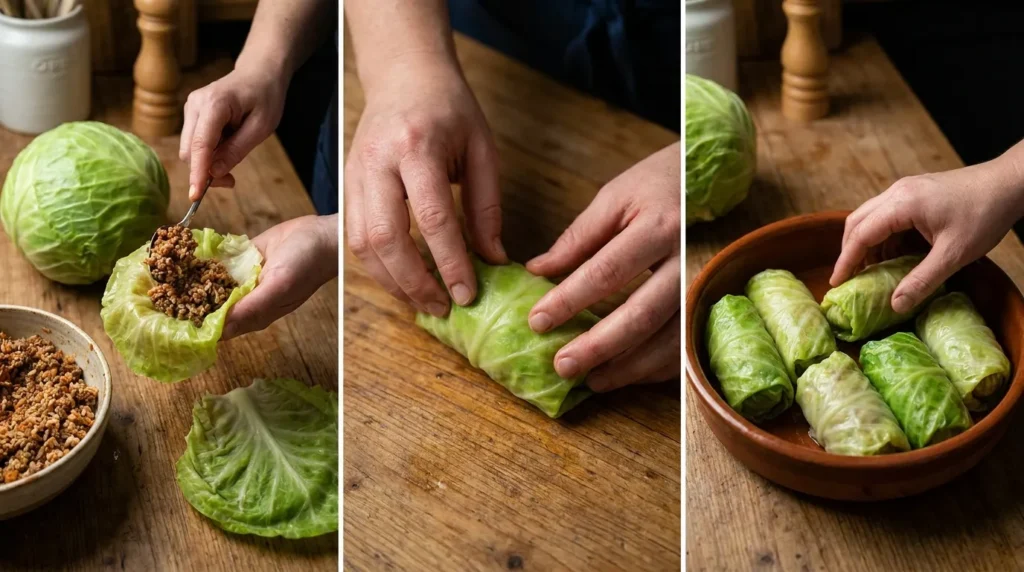
How to Make Whole Stuffed Cabbage
1. Prepare the Cabbage
Remove any damaged outer leaves and rinse the cabbage under cool running water.
Place it on a cutting board with the stem facing upward. Carefully cut around the core using a sharp knife and remove as much of the firm center as possible without damaging the outer leaves.
This creates space for the filling and makes it easier to loosen the leaves.
2. Soften the Cabbage Leaves
Bring a large pot of salted water to a boil.
Carefully place the cabbage in the water and cook for approximately 5–8 minutes. Turn it gently if needed so the outer leaves soften evenly.
Remove the cabbage and allow it to cool enough to handle. Gently loosen the outer leaves. If the inner leaves remain firm, return the cabbage to the hot water for a few more minutes.
3. Prepare the Filling
Heat olive oil in a skillet over medium heat. Add the chopped onion and cook until softened.
Stir in the garlic and cook briefly until fragrant.
Transfer the onion mixture to a large bowl. Add the ground meat, rinsed rice, parsley, paprika, cumin, black pepper, and salt.
Mix gently until the ingredients are evenly combined.
Because the rice is uncooked, it will absorb moisture during the cooking process. Do not pack the filling too tightly, as it needs room to expand.
4. Prepare the Tomato Sauce
In a bowl, combine the crushed tomatoes, tomato paste, broth, olive oil, paprika, oregano, salt, and black pepper.
Stir until smooth. Add lemon juice if you prefer a slightly tangy sauce.
Set aside while assembling the cabbage.
5. Fill the Cabbage
Place the softened cabbage on a clean work surface with the hollowed core facing upward.
Gently open the loosened leaves. Spoon some filling between the leaves, working from the center outward.
Avoid overfilling. Leave enough room for the rice to expand as it cooks.
If the cabbage leaves are tightly packed, use a spoon handle to guide small amounts of filling into the spaces.
6. Secure the Cabbage
Once the cabbage is filled, gently bring the outer leaves back together to hold the filling inside.
If necessary, tie the cabbage loosely with kitchen-safe cooking twine. Do not tie it too tightly because the rice expands during cooking.
Place the cabbage core-side down in a large heavy-bottomed pot or Dutch oven.
7. Add the Sauce
Pour the tomato sauce around and over the cabbage.
The liquid should come partway up the sides of the cabbage. Add a little extra broth or water if necessary.
Avoid adding so much liquid that the cabbage floats freely.
8. Cook Slowly
Cover the pot and bring the sauce to a gentle simmer over medium heat.
Reduce the heat to low and cook for approximately 1½–2 hours. Check occasionally to make sure the sauce is simmering gently and the bottom is not scorching.
Add a little broth or water if the liquid becomes too low.
The cabbage is ready when the leaves are tender, the rice is fully cooked, and the filling reaches a safe internal temperature. Ground meat should reach 71°C (160°F).
9. Alternative Oven Method
For oven cooking, preheat the oven to 180°C (350°F).
Place the stuffed cabbage and sauce in a covered oven-safe Dutch oven. Bake for approximately 1½–2 hours, checking occasionally for tenderness and sufficient liquid.
Cooking time varies with cabbage size and filling thickness.
10. Rest Before Serving
Remove the cabbage from the heat and let it rest, covered, for approximately 10–15 minutes.
Carefully transfer it to a serving dish using two large spoons or a suitable spatula.
Remove any kitchen twine before slicing.
11. Slice and Serve
Cut the cabbage into wedges, making sure each portion contains both tender leaves and filling.
Spoon extra tomato sauce over the top. Garnish with fresh parsley and serve warm.
Tips for Perfect Whole Stuffed Cabbage
- Choose a large firm cabbage: A compact head with healthy leaves is easier to fill.
- Soften the leaves first: Blanching makes them flexible and less likely to tear.
- Do not overfill: Rice expands as it cooks.
- Keep the simmer gentle: High heat can damage the cabbage and cause the sauce to reduce too quickly.
- Use a heavy pot: It distributes heat more evenly.
- Check the liquid: Add broth if the sauce becomes too thick.
- Allow resting time: This makes the cabbage easier to transfer and slice.
Variations and Substitutions
Beef and Lamb Filling
Use a mixture of ground beef and lamb for a richer flavor. Parsley, cumin, and paprika complement both meats.
Vegetarian Stuffed Cabbage
Replace the meat with cooked lentils, finely chopped mushrooms, and additional vegetables. Adjust the cooking time and ensure the rice is fully tender.
Spicy Tomato Sauce
Add chili flakes, cayenne pepper, or chopped fresh chili to the sauce.
Herb-Focused Filling
Add dill, mint, or extra parsley for a fresher flavor.
Brown Rice Filling
Use brown rice if desired, but partially cook it first because it generally takes longer to become tender than white rice.
Lemon and Tomato Variation
Add extra lemon juice to the sauce for a brighter, tangier flavor.
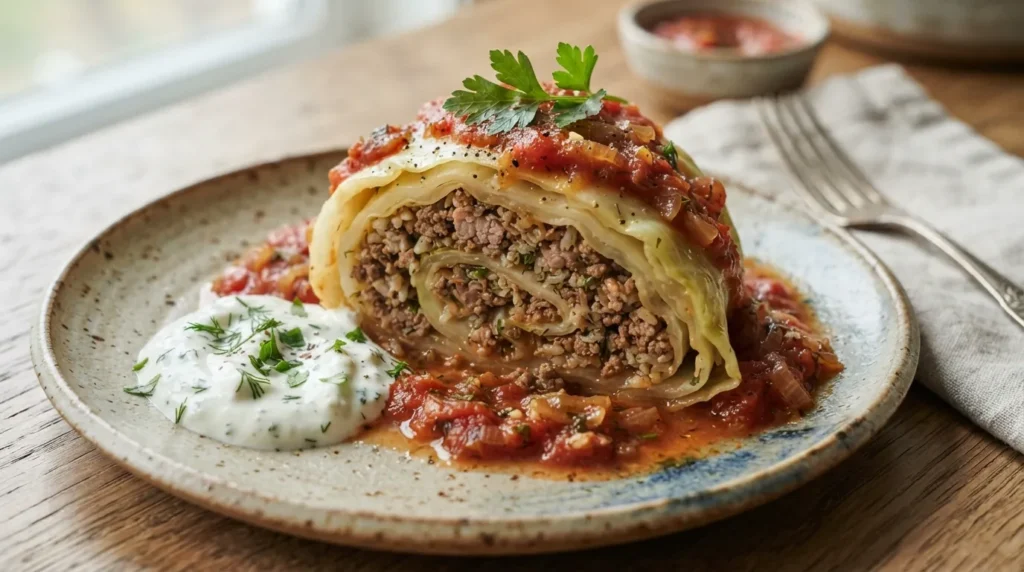
What to Serve with Whole Stuffed Cabbage
Whole Stuffed Cabbage is a filling main course, but a few simple sides make the meal even more enjoyable.
- Plain yogurt: A cool, creamy accompaniment balances the tomato sauce.
- Garlic yogurt sauce: Mix yogurt with garlic, lemon, and fresh herbs.
- Crusty bread: Useful for soaking up the sauce.
- Fresh cucumber salad: Adds a crisp, refreshing contrast.
- Roasted vegetables: Carrots, potatoes, or zucchini work well.
- Steamed rice: A small side portion is useful if you prefer extra rice with the sauce.
Storage and Make-Ahead Instructions
Refrigeration: Cool leftovers promptly and store in an airtight container in the refrigerator for up to 3–4 days.
Freezing: Divide the cooked cabbage into portions with sauce and freeze in suitable airtight containers for up to 2 months. The cabbage may become softer after thawing.
Reheating: Warm gently in a covered saucepan over low heat or in an oven at 170°C (340°F) until steaming hot throughout.
Make-ahead: Prepare the filling and tomato sauce a day ahead. Refrigerate them separately and assemble the cabbage shortly before cooking.
Keep raw meat filling refrigerated and separate from ready-to-eat foods. Refrigerate cooked leftovers within 2 hours.
Frequently Asked Questions
1. What type of cabbage is best?
A large, firm green cabbage is ideal because its leaves are sturdy enough to hold the filling.
2. Do I need to boil the cabbage first?
Yes. Blanching softens the leaves, making them easier to open and fill without tearing.
3. Can I use cooked rice?
Yes, but the filling and cooking time may need adjustment. Reduce the added liquid and check that the meat is fully cooked.
4. Why is my cabbage tearing?
The leaves may not have softened enough, or they may be handled too roughly. Blanch the cabbage longer if necessary and separate the leaves gently.
5. Can I prepare it without ground beef?
Yes. Ground lamb, a mixture of meats, or a vegetarian filling can be used.
6. How do I know when the rice is cooked?
Check the filling near the center of the cabbage. The rice should be tender, and the meat should reach a safe internal temperature.
7. Can I cook it in a slow cooker?
Yes, if your slow cooker is large enough. Add the sauce and cook until the cabbage and filling are tender, checking the internal temperature and rice doneness.
8. Why is my filling dry?
It may have cooked with too little liquid or for too long. Make sure the sauce surrounds the cabbage and add broth when necessary.
9. Can I freeze whole stuffed cabbage?
Yes. It is usually easier to freeze it in portions with some sauce.
10. How should I serve it?
Slice it into wedges and spoon tomato sauce over each portion. Fresh parsley and plain yogurt are excellent accompaniments.
Conclusion
Whole Stuffed Cabbage is a hearty, traditional-style meal that combines tender cabbage leaves, savory seasoned filling, and rich tomato sauce. Although it requires some preparation and slow cooking, the result is an impressive dish that is perfect for sharing. Prepare it ahead, cook it gently, and allow it to rest before slicing for the best presentation.