
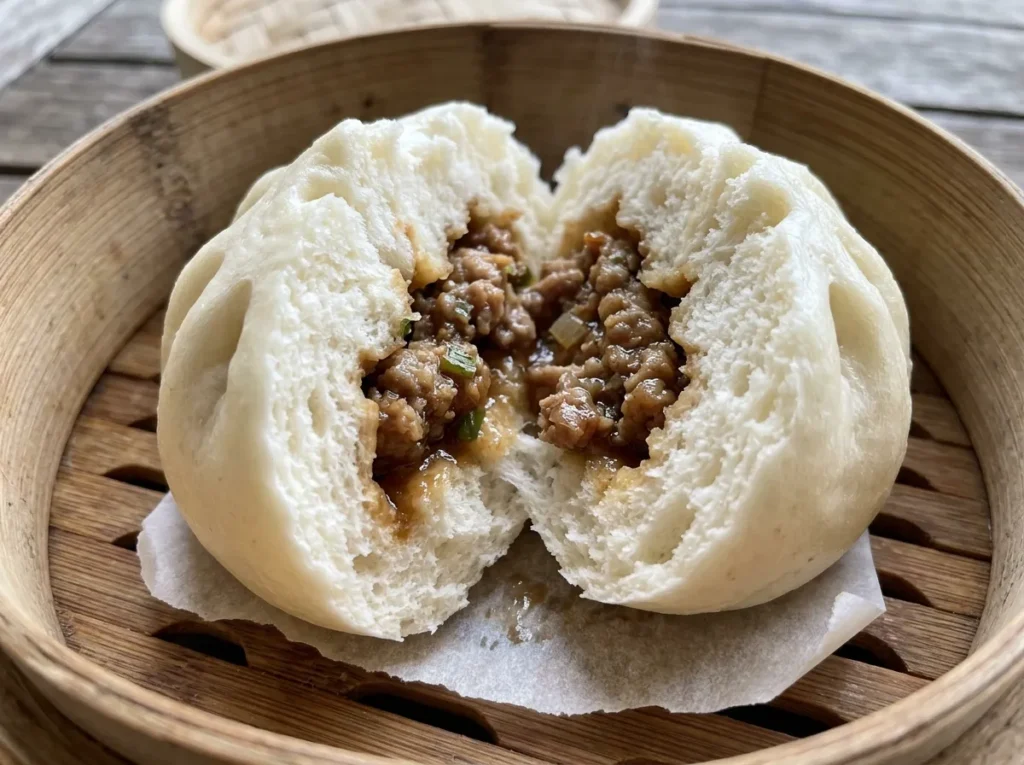
Fluffy homemade pork siopao is a delicious Filipino steamed bun filled with tender, savory pork and wrapped in soft, pillowy dough. These warm, satisfying buns are popular as a snack, breakfast, or light meal. Their slightly sweet dough pairs beautifully with the rich pork filling, creating a comforting treat that tastes even better when freshly steamed.
This homemade pork siopao recipe uses simple ingredients and easy-to-follow steps, making it a great choice for beginners. With a few helpful tips for preparing the filling, kneading the dough, and steaming the buns, it’s possible to make bakery-style siopao right in your own kitchen.
Why You’ll Love This Pork Siopao Recipe
- Soft and fluffy dough: A tender, pillowy texture surrounds every bite of savory filling.
- Flavorful pork filling: Ground pork, garlic, onion, soy sauce, and oyster sauce create a rich, delicious center.
- Perfect for meal prep: The buns can be refrigerated or frozen for quick snacks and easy meals.
- Beginner-friendly: Clear instructions help make the dough, shape the buns, and steam them successfully.
- Great for sharing: Homemade siopao is perfect for family gatherings, lunchboxes, and afternoon snacks.
- Customizable filling: Add mushrooms, chopped vegetables, or a little extra black pepper to suit your taste.
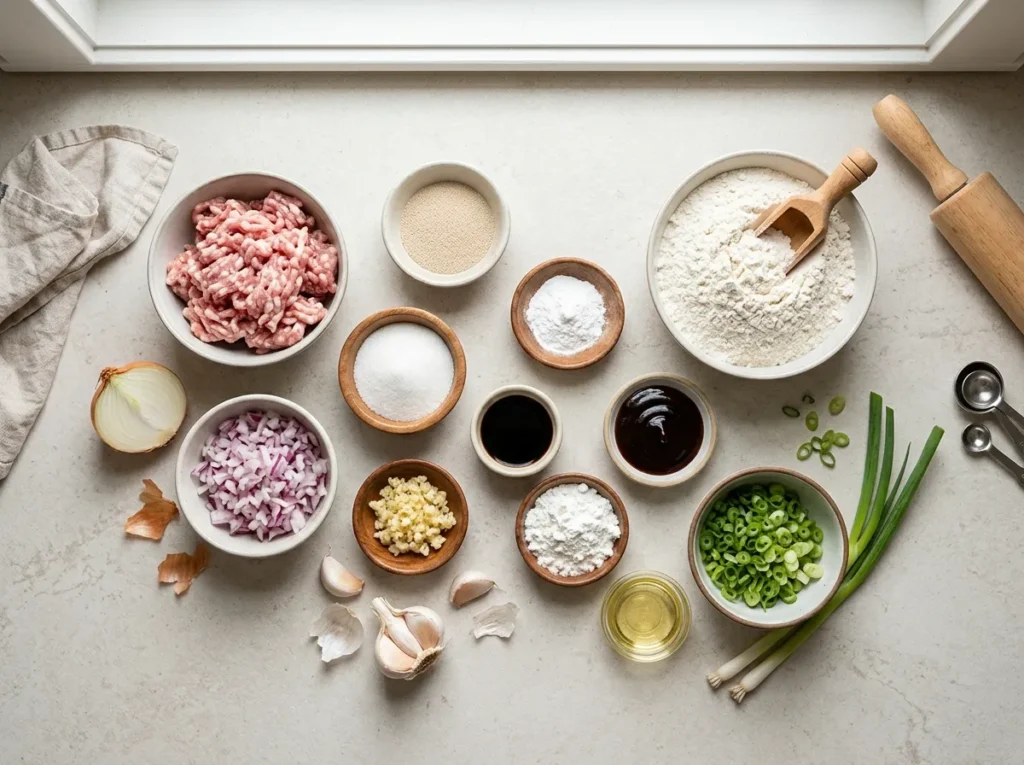
Ingredients for Homemade Pork Siopao
This recipe makes approximately 10 medium-sized pork siopao buns.
For the Dough
- 3 cups (375 g) all-purpose flour
- 2 ¼ teaspoons (7 g) instant yeast
- ¼ cup (50 g) granulated sugar
- 1 teaspoon baking powder
- ½ teaspoon salt
- ¾ cup (180 ml) lukewarm water
- 2 tablespoons (30 ml) neutral cooking oil
For the Pork Filling
- 1 pound (450 g) ground pork
- 1 tablespoon neutral cooking oil
- 1 small onion, finely chopped
- 3 cloves garlic, minced
- 2 tablespoons soy sauce
- 1 tablespoon oyster sauce
- 1 tablespoon brown sugar
- ½ teaspoon ground black pepper
- 1 tablespoon cornstarch
- 2 tablespoons water
- 2 tablespoons chopped green onions, optional
For Steaming
- Water, as needed for the steamer
- 10 small squares of parchment paper
Equipment Needed
- Large mixing bowl
- Measuring cups and spoons or a kitchen scale
- Frying pan
- Wooden spoon or spatula
- Clean kitchen towel or plastic wrap
- Rolling pin, optional
- Steamer with a lid
- Parchment paper
- Tongs
How to Make Fluffy Homemade Pork Siopao
Step 1: Prepare the Pork Filling
Heat the cooking oil in a frying pan over medium heat. Add the chopped onion and cook for 2–3 minutes until softened. Stir in the minced garlic and cook for another 30 seconds until fragrant.
Add the ground pork and break it apart with a spatula. Cook for 6–8 minutes, stirring occasionally, until the pork is browned and fully cooked.
Stir in the soy sauce, oyster sauce, brown sugar, and black pepper. Mix well so the pork is evenly coated in the seasoning.
In a small bowl, combine the cornstarch and water until smooth. Pour this mixture into the pan and stir for 1–2 minutes, until the sauce thickens and coats the pork.
Add the green onions if desired. Transfer the filling to a shallow bowl and let it cool completely before assembling the buns. Cooling the filling helps prevent the dough from becoming soggy or difficult to seal.
Step 2: Mix the Dough
In a large mixing bowl, combine the flour, instant yeast, sugar, baking powder, and salt. Stir to distribute the ingredients evenly.
Pour in the lukewarm water and cooking oil. Mix until a rough dough forms and no large patches of dry flour remain.
If the dough feels slightly sticky, resist the urge to add too much flour immediately. A soft dough helps produce fluffy steamed buns.
Step 3: Knead Until Smooth
Transfer the dough to a lightly floured surface. Knead for 8–10 minutes, until it becomes smooth, elastic, and soft.
If using a stand mixer, knead with a dough hook for approximately 5–7 minutes on low to medium-low speed.
Shape the dough into a ball and place it in a lightly oiled bowl. Cover with a clean kitchen towel or plastic wrap.
Step 4: Let the Dough Rise
Leave the covered dough in a warm, draft-free place for about 60–90 minutes, or until it has approximately doubled in size.
Rising time depends on room temperature, so check the dough rather than relying only on the clock. A comfortably warm environment encourages the yeast to work without overheating the dough.
Step 5: Divide the Dough
Gently press the dough to release excess air. Transfer it to a clean work surface and divide it into 10 equal portions.
Roll each portion into a smooth ball. Cover the dough balls with a towel while working to prevent them from drying out.
Step 6: Fill and Shape the Siopao
Flatten one dough ball into a circle about 4–5 inches wide. Keep the center slightly thicker than the edges to help support the filling.
Place approximately 2 tablespoons of cooled pork filling in the center. Avoid overfilling, as too much filling can make the bun difficult to seal.
Lift the edges of the dough around the filling and pinch them together firmly at the top. Twist the pinched section gently to seal the bun.
Place each bun seam-side down on an individual square of parchment paper. Repeat with the remaining dough and filling.
Step 7: Let the Buns Rest
Arrange the shaped buns in the steamer, leaving enough space between them for expansion. Keep the lid off for now and cover the buns loosely with a clean towel.
Let them rest for 20–30 minutes, until slightly puffy. This second rise helps create a softer, lighter texture.
Step 8: Steam the Pork Siopao
Add water to the steamer and bring it to a gentle simmer. Make sure the water level stays below the steamer basket.
Place the buns in the steamer with space between each one. Cover with a lid and steam over medium-low heat for 12–15 minutes, depending on their size and the strength of the steam.
Avoid lifting the lid during steaming because a sudden temperature change can affect the texture. The pork filling should already be fully cooked before it goes into the buns.
Step 9: Rest and Serve
Turn off the heat and let the buns rest inside the covered steamer for about 3–5 minutes before opening the lid gradually.
Carefully remove the buns and serve warm. Enjoy them on their own or with a dipping sauce made from soy sauce, calamansi or lemon juice, and a little chili if desired.
Tips for the Softest, Fluffiest Pork Siopao
- Measure the flour carefully: Too much flour can make the dough dense. Weighing the flour provides the most consistent results.
- Use lukewarm water: Water that is too hot can damage the yeast. Aim for comfortably warm water, not hot.
- Knead thoroughly: Smooth, elastic dough helps create a soft, even crumb.
- Cool the filling completely: Warm filling can soften the dough and make sealing more difficult.
- Seal each bun firmly: Pinch the edges together well to help prevent the filling from leaking.
- Leave enough room: Siopao expands during its second rise and steaming, so avoid overcrowding the steamer.
- Keep the steam gentle: Very aggressive boiling can cause uneven cooking and make the buns more likely to wrinkle.
- Prevent condensation: If possible, wrap the steamer lid with a clean kitchen towel, securing it safely away from the heat, so water droplets do not fall onto the buns.
- Avoid sudden cooling: Let the buns rest briefly in the covered steamer before removing the lid.
Variations and Substitutions
Pork Siopao with Mushrooms
Add ½ cup of finely chopped mushrooms to the filling when cooking the pork. Cook until the mushrooms release their moisture and the mixture is no longer watery.
Sweet and Savory Pork Siopao
For a slightly sweeter filling, increase the brown sugar to 1½ tablespoons. Balance the sweetness with a small extra splash of soy sauce if needed.
Pork Siopao with Vegetables
Mix in ¼–½ cup of finely diced carrots or cabbage. Cook the vegetables until tender and allow any excess moisture to evaporate before thickening the filling.
Ground Chicken Siopao
Replace the ground pork with ground chicken. Cook it thoroughly before adding the sauce mixture, and keep the filling moist without making it watery.
Pork Siopao Without Oyster Sauce
Replace the oyster sauce with an additional 1 tablespoon of soy sauce and 1 teaspoon of brown sugar. The flavor will be slightly different, but the filling will still be savory and delicious. For a vegetarian-friendly alternative, a mushroom-based stir-fry sauce may also work.
Dairy-Free Pork Siopao
This recipe is naturally dairy-free when the flour, yeast, sauces, and other packaged ingredients are dairy-free. Check ingredient labels if dairy avoidance is important.
What to Serve with Pork Siopao
Homemade pork siopao is satisfying on its own, but it also pairs well with a variety of sides and sauces.
- Soy-calamansi dipping sauce: Combine soy sauce with calamansi juice or lemon juice for a tangy, savory dip.
- Chili garlic sauce: Add a little heat to balance the slightly sweet dough.
- Fresh cucumber salad: Cool, crisp vegetables provide a refreshing contrast to the warm buns.
- Vegetable soup: Serve with a light broth-based soup for a more filling meal.
- Steamed vegetables: Broccoli, carrots, or bok choy make simple side dishes.
- Hot tea: A cup of unsweetened tea complements siopao as a morning or afternoon snack.
How to Store Pork Siopao
Refrigerating
Allow the steamed buns to cool until they are no longer hot, then place them in an airtight container. Refrigerate within 2 hours of cooking and consume within 3–4 days.
Freezing
For longer storage, let the buns cool completely. Wrap them individually or place them in a freezer-safe container with parchment between layers. Freeze for up to 2–3 months for best quality.
Reheating
- Steamer: Steam refrigerated buns for about 5–8 minutes, or frozen buns for approximately 10–15 minutes, until heated through.
- Microwave: Wrap a bun in a slightly damp paper towel and microwave in short intervals until hot. Timing depends on bun size and microwave power.
- From frozen: Steaming directly from frozen usually gives the softest texture. Ensure the center is thoroughly heated before serving.
Avoid repeatedly cooling and reheating the same bun. Discard any siopao that has been left at room temperature for more than 2 hours.
Frequently Asked Questions
1. What is pork siopao?
Pork siopao is a Filipino-style steamed bun filled with seasoned pork. It is commonly enjoyed as a snack, breakfast, or quick meal. The bun has a soft, slightly sweet dough that complements the savory filling.
2. Is pork siopao difficult to make at home?
No. Although the recipe includes yeast dough, the process is straightforward when divided into mixing, rising, filling, shaping, and steaming. Allowing enough time for the dough to rise is the key to achieving fluffy buns.
3. Why is my siopao dough not fluffy?
Dense buns can result from too much flour, insufficient kneading, inactive yeast, or not allowing enough rising time. Use fresh yeast, keep the dough soft, and let it become visibly puffy before steaming.
4. Can instant yeast be used for pork siopao?
Yes. Instant yeast works well and can be mixed directly with the dry ingredients. If using active dry yeast, follow its package directions; blooming it in some of the lukewarm water may be helpful.
5. Can the pork filling be prepared ahead of time?
Yes. Prepare the filling up to 2 days in advance and refrigerate it in a covered container. Cool it promptly after cooking and refrigerate it within 2 hours. Bring it out when ready to assemble the buns, keeping it chilled until needed.
6. Why did my siopao collapse after steaming?
Collapse may occur when the dough is overproofed, the lid is removed too quickly, or the buns experience a sudden temperature change. Let the shaped buns become slightly puffy rather than excessively large, and rest them briefly in the covered steamer after cooking.
7. Can pork siopao be frozen?
Yes. Fully steamed and cooled pork siopao freezes well for approximately 2–3 months. Store the buns in a sealed freezer-safe container and reheat them thoroughly before eating.
8. How do I keep the buns from sticking to the steamer?
Place each bun on a small square of parchment paper. Leave enough space between the buns so they do not touch as they expand.
9. Can this recipe be made without a bamboo steamer?
Yes. A metal steamer basket or a heat-safe steaming insert placed over simmering water works well. Keep the buns above the water and cover the pot with a well-fitting lid.
10. How do I know when pork siopao is fully cooked?
The dough should look set, feel soft, and no longer appear raw or sticky inside. Since the pork filling is cooked beforehand, the main goal is to steam the dough through and reheat the filling. For food safety, the reheated filling should reach 165°F (74°C).
11. Can the siopao dough be made ahead of time?
Yes. The dough can be prepared ahead and refrigerated in a covered, lightly oiled container after kneading. For best results, refrigerate it overnight, allow it to warm and become workable, then shape the buns and give them enough time for the second rise. Yeast activity will continue slowly in the refrigerator.
12. What sauce goes well with pork siopao?
Soy sauce mixed with calamansi or lemon juice is a simple and popular option. Chili garlic sauce, sweet chili sauce, or a savory homemade dipping sauce also pairs well with the pork filling.
Conclusion
Fluffy homemade pork siopao brings the comforting taste of Filipino steamed buns into the home kitchen. With soft yeast dough, a savory pork filling, and a gentle steaming method, these buns are delicious for breakfast, snacks, or a simple meal.
Prepare the filling ahead of time, seal each bun carefully, and give the dough enough time to rise for the best texture. Serve the siopao warm with a tangy dipping sauce, and keep extra buns refrigerated or frozen for an easy homemade treat whenever a craving strikes.