
Tender, golden chicken coated in silky garlic butter makes an easy dinner that tastes wonderfully rich without requiring complicated preparation.
This Juicy Garlic Butter Chicken Breast is cooked in a skillet until beautifully browned, then finished with butter, garlic, lemon, and herbs. The result is a tender center with a savory, buttery coating and a bright hint of citrus.
The recipe uses everyday ingredients and a simple cooking method, making it especially useful for beginners and busy home cooks.
Serve it with creamy mashed potatoes, fluffy rice, roasted vegetables, or a crisp salad. The buttery pan juices are delicious spooned over almost any side dish.
Ingredients
For the Chicken
- 4 boneless, skinless chicken breasts, about 150–180 g each
- 1 teaspoon salt
- 1/2 teaspoon ground black pepper
- 1 teaspoon paprika
- 1/2 teaspoon garlic powder
- 1/2 teaspoon onion powder
- 1 tablespoon olive oil
For the Garlic Butter Sauce
- 3 tablespoons unsalted butter
- 5 garlic cloves, finely minced
- 1 tablespoon fresh lemon juice
- 1/2 teaspoon dried Italian herbs
- 1 tablespoon fresh parsley, finely chopped
- 2 tablespoons chicken broth or water
Optional Garnish
- Extra chopped fresh parsley
- Lemon wedges
- A light sprinkle of paprika
Use halal-certified chicken and check packaged chicken broth and seasonings for suitable ingredients. No alcohol or wine is needed for this recipe.
Tools and Equipment
- Large skillet
- Small bowl
- Measuring spoons
- Tongs
- Sharp knife
- Cutting board
- Meat thermometer, optional
- Spoon for basting
Step-by-Step Instructions
1. Prepare the chicken
Pat the chicken breasts dry with paper towels.
If the pieces are very thick, place each breast between two sheets of food-safe plastic wrap or parchment paper and gently pound it to an even thickness.
An even thickness helps the chicken cook more consistently and prevents the thinner end from becoming dry.
2. Season the chicken
In a small bowl, combine the salt, black pepper, paprika, garlic powder, and onion powder.
Sprinkle the seasoning evenly over both sides of each chicken breast.
Press the seasoning gently onto the surface so it stays in place during cooking.
3. Heat the skillet
Place a large skillet over medium heat.
Add the olive oil and allow it to warm for about 30 seconds.
The pan should be hot enough for the chicken to sizzle as soon as it touches the surface.
4. Sear the chicken
Place the seasoned chicken breasts in the skillet.
Cook for about 5 to 7 minutes on the first side, depending on thickness.
Avoid moving the chicken around too much. Letting it sit undisturbed helps create a rich golden-brown crust.
5. Flip and continue cooking
Turn the chicken using tongs.
Cook the second side for another 4 to 6 minutes.
If the chicken is thick, reduce the heat slightly and continue cooking until the center is fully cooked.
For food safety, chicken should reach 74°C (165°F) in the thickest part.
6. Lower the heat
Once the chicken is nearly cooked, reduce the heat to medium-low.
This prevents the garlic butter from burning while the chicken finishes cooking.
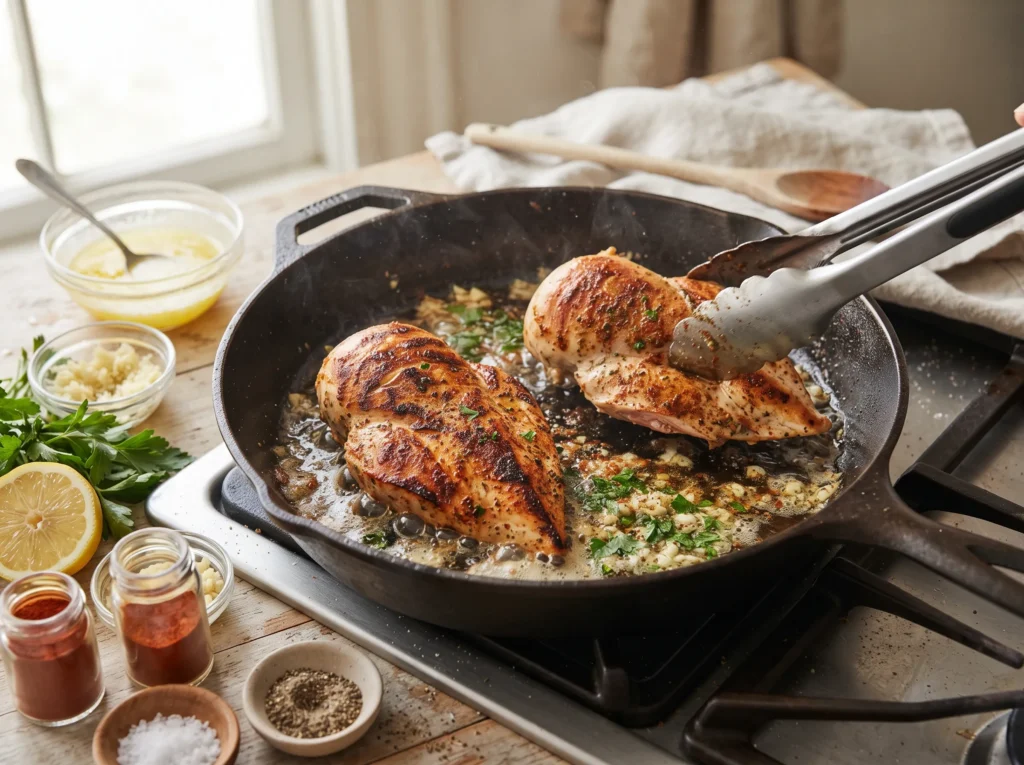
7. Add the butter and garlic
Add the butter to the skillet.
Once it melts, add the minced garlic.
Cook for about 30 to 45 seconds, stirring gently around the chicken.
The garlic should smell fragrant and savory without becoming dark brown.
8. Add lemon and herbs
Pour in the lemon juice and chicken broth or water.
Add the dried Italian herbs and chopped parsley.
Stir the pan gently to combine everything into a glossy garlic butter sauce.
9. Baste the chicken
Tilt the skillet slightly and use a spoon to scoop up the garlic butter.
Spoon the warm sauce over each chicken breast several times.
This coats the chicken with a rich, fragrant layer while helping keep the surface moist.
10. Finish cooking
Continue cooking for another 1 to 2 minutes, or until the chicken reaches 74°C (165°F) in the thickest part.
If the sauce becomes too thick, add another tablespoon of water or chicken broth.
11. Rest the chicken
Transfer the cooked chicken to a plate.
Let it rest for about 5 minutes before slicing.
Resting allows the juices to settle, helping the chicken stay tender rather than losing moisture immediately when cut.
12. Serve
Slice the chicken against the grain.
Spoon the remaining garlic butter sauce over the top and garnish with fresh parsley.
Serve immediately with a favorite side dish.
Tips & Variations
Choose evenly sized chicken breasts
Chicken breasts often vary significantly in thickness.
Pounding thick pieces to an even size helps them cook at the same rate and makes the finished chicken more tender.
Do not skip drying the chicken
Moisture on the surface can prevent proper browning.
Patting the chicken dry before seasoning helps create a deeper golden crust in the skillet.
Use medium heat
High heat can brown the outside too quickly.
Moderate heat gives the chicken enough time to cook through while developing a flavorful crust.
Avoid burning the garlic
Garlic cooks quickly.
Add it after the chicken has been mostly cooked and reduce the heat first. If garlic becomes very dark, it can taste bitter.
Baste generously
The garlic butter sauce is one of the best parts of the recipe.
Spoon it over the chicken several times during the final stage so the meat gets coated with the buttery, garlicky flavor.
Let the chicken rest
Cutting the chicken immediately after cooking can release some of the juices onto the plate.
A short 5-minute rest gives the meat time to settle and helps maintain a juicy texture.
Use chicken thighs instead
Boneless, skinless chicken thighs can replace chicken breasts.
They have more natural fat and remain very tender, although they may require a little extra cooking time depending on their size.
Add extra lemon
For a brighter flavor, increase the lemon juice to 1 1/2 tablespoons.
The citrus cuts through the richness of the butter and gives the sauce a fresh finish.
Make it creamy
For a creamy variation, remove the cooked chicken from the skillet and add 1/4 cup heavy cream to the garlic butter sauce.
Simmer gently until slightly thickened, then return the chicken to the skillet.
Add mushrooms
Sliced mushrooms pair beautifully with garlic butter.
Cook about 1 cup sliced mushrooms in the skillet after removing the chicken. Once softened and golden, return the chicken and finish with the sauce.
Add spinach
A handful of fresh spinach can be stirred into the sauce during the final minute.
The leaves wilt quickly and add color without changing the basic cooking process.
Make it spicy
Add 1/4 teaspoon crushed red pepper flakes to the garlic butter sauce.
A little chili creates gentle heat that works especially well with the lemon and garlic.
Use fresh herbs
Fresh parsley adds brightness, but other soft herbs can also work.
Fresh cilantro or finely chopped chives can provide a different flavor profile while keeping the dish fresh.
Common mistakes to avoid
Cooking very thick chicken breasts without flattening them can lead to an overcooked exterior and undercooked center.
Another common mistake is using too much heat. Chicken can become dry before it cooks evenly.
Avoid adding the garlic too early because it may burn before the chicken is finished.
Finally, do not skip the resting period. A few minutes can make the difference between dry slices and juicy, tender chicken.
Storage & Serving
How to store leftovers
Allow the chicken to cool slightly, then transfer it to an airtight container.
Refrigerate within 2 hours of cooking and use the leftovers within 3 to 4 days.
Store the chicken with some of the garlic butter sauce to help prevent the meat from drying out.
Can garlic butter chicken be frozen?
Yes.
Cool the chicken completely and place it in a freezer-safe container with some sauce.
For the best quality, use within 2 to 3 months.
Thaw frozen chicken in the refrigerator before reheating.
How to reheat
Reheat the chicken gently in a covered skillet over low heat.
Add a tablespoon of water or chicken broth to the pan if the sauce has become thick.
Avoid high heat because reheating too aggressively can make chicken breast tough.
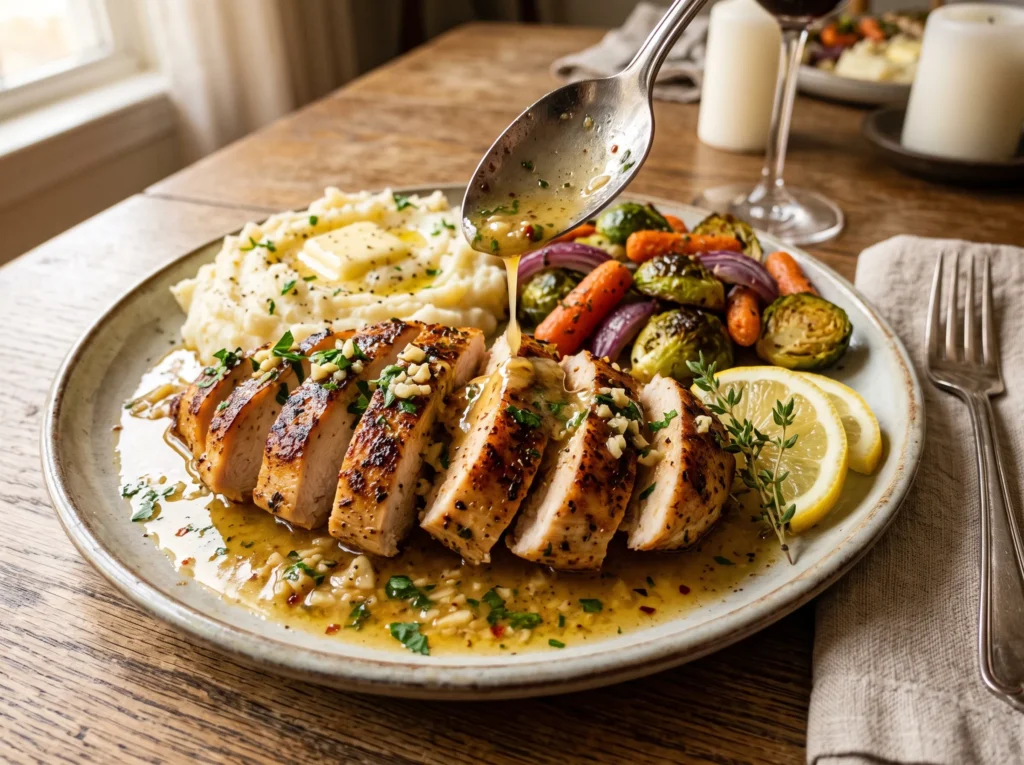
Best side dishes
Garlic butter chicken pairs well with creamy, fluffy, or roasted sides.
Serve it over steamed rice, mashed potatoes, couscous, or pasta.
For a lighter plate, add roasted broccoli, green beans, carrots, or a fresh salad.
The buttery sauce also makes a delicious topping for rice and vegetables.
Make it a meal-prep recipe
Cook several chicken breasts at once and divide them into individual containers.
Add rice or potatoes and a serving of vegetables to each container for easy lunches or dinners throughout the week.
Keep the sauce with the chicken so each serving stays moist and flavorful.
FAQ
How do you keep chicken breast juicy?
Even thickness, moderate heat, and proper cooking time are key.
Avoid cooking the chicken far beyond 74°C (165°F), and let it rest for about 5 minutes before slicing.
Can chicken breast be cooked without pounding it?
Yes.
Pounding is especially helpful for very thick pieces, but smaller, evenly sized chicken breasts can be cooked without flattening.
Can olive oil replace butter?
Olive oil can be used for cooking the chicken, but butter provides the signature rich flavor of the finished sauce.
For a dairy-free version, use olive oil or a suitable dairy-free butter alternative.
Can garlic powder replace fresh garlic?
Yes, but fresh garlic gives the sauce a stronger aroma and more noticeable flavor.
If using garlic powder instead, add it gradually because it is more concentrated.
What herbs taste good with garlic butter chicken?
Parsley, thyme, rosemary, and Italian herb blends all work well.
Parsley gives the dish a fresh finish, while rosemary and thyme create a deeper, more aromatic flavor.
Can this recipe be made in the oven?
Yes.
Sear the seasoned chicken briefly in an oven-safe skillet, then transfer it to a preheated oven to finish cooking.
Add the garlic butter sauce near the end so the garlic does not burn.
How do you know when chicken breast is done?
The most reliable method is checking the thickest part with a food thermometer.
Chicken should reach 74°C (165°F) for safe consumption.
Can chicken breast be marinated first?
Yes.
A short marinade with lemon juice, yogurt, garlic, and spices can add extra flavor. Pat the chicken dry before searing so it still develops a good crust.
Can frozen chicken breast be used?
Frozen chicken should be completely thawed in the refrigerator before following this skillet recipe.
Cooking partially frozen chicken can lead to uneven cooking.
What can replace chicken broth?
Water works perfectly well.
A small amount of water helps loosen the buttery sauce and combine the flavorful browned bits from the pan.
Conclusion
Juicy, golden, buttery, and packed with garlic flavor, this recipe turns simple Chicken Breast into a comforting meal that feels special without requiring much effort.
The combination of a savory browned crust, fragrant garlic, silky butter, fresh lemon, and herbs creates a rich sauce that makes every bite flavorful.
The recipe is flexible enough for weeknight dinners, meal prep, or a relaxed family meal. Pair it with rice, potatoes, vegetables, or a crisp salad for an easy complete plate.
With a few basic ingredients and a simple skillet method, tender homemade chicken is only a short cook away.
Give this Chicken Breast recipe a try, serve it with plenty of garlic butter sauce, and enjoy a warm, satisfying dinner that is easy to make and even easier to love.

