Homemade Turkish Sesame Bread Rings, commonly known as simit, are a beloved Turkish bakery favorite. These circular breads are recognizable by their deep golden color and generous coating of toasted sesame seeds. Their outside is pleasantly crisp, while the inside is soft, chewy, and full of fresh-baked flavor.
Simit is often enjoyed for breakfast or as a snack with tea. It is delicious on its own, but it can also be served with cheese, olives, tomatoes, cucumbers, jam, or honey.
Making simit at home is easier than it may seem. The dough uses basic bread ingredients, and the distinctive sesame coating gives the rings their traditional appearance. A simple mixture of grape molasses and water helps the seeds adhere while adding color and flavor.
This recipe is designed for a home kitchen and produces bakery-style sesame bread rings that are best enjoyed fresh from the oven.
Why You’ll Love This Recipe
- Traditional inspiration: Recreates the familiar flavor and appearance of Turkish simit.
- Simple bread ingredients: Uses flour, yeast, water, sugar, and salt.
- Distinctive sesame crust: A generous coating creates a nutty exterior.
- Versatile serving options: Enjoy with savory or sweet accompaniments.
- Great for sharing: Make a batch for breakfast, brunch, or afternoon tea.
Recipe Overview
- Preparation Time: 25 minutes
- Rising Time: 1 hour
- Cooking Time: 18–22 minutes
- Total Time: Approximately 1 hour 45 minutes
- Servings: 6
- Yield: 6 sesame bread rings
- Cooking Method: Baking
Ingredients
For the Dough
- 3 cups all-purpose flour or bread flour
- 1 cup warm water, approximately
- 2 teaspoons instant yeast
- 1 tablespoon sugar
- 1 teaspoon salt
- 2 tablespoons olive oil or neutral cooking oil
For the Sesame Coating
- 1 cup sesame seeds
- ¼ cup grape molasses
- ¼ cup water
Optional additions:
- ½ teaspoon ground mahleb for a traditional-style aromatic note
- 1 tablespoon honey instead of sugar, if preferred
How to Make Homemade Turkish Sesame Bread Rings
1. Activate the Yeast
If using active dry yeast, combine the warm water, sugar, and yeast in a small bowl. Let the mixture stand for approximately 5–10 minutes until foamy.
If using instant yeast, it can be mixed directly with the flour, although dissolving it in the water first is also suitable.
Make sure the water is warm rather than hot. Excessive heat can damage the yeast.
2. Prepare the Dough
Add the flour and salt to a large mixing bowl. Pour in the yeast mixture and olive oil.
Mix until a rough dough forms. If the dough seems dry, add a little more water, one tablespoon at a time.
Transfer the dough to a lightly floured work surface.
3. Knead Until Smooth
Knead the dough for approximately 8–10 minutes by hand, or 5–7 minutes using a stand mixer fitted with a dough hook.
The dough should become smooth, elastic, and slightly tacky without sticking excessively to your hands.
If it is very sticky, add flour gradually rather than adding too much at once. Too much flour can make the finished bread dense.
4. Let the Dough Rise
Place the dough in a lightly oiled bowl and turn it once to coat the surface.
Cover with a clean kitchen towel or plastic wrap. Leave it in a warm place for approximately 60 minutes, or until it has roughly doubled in size.
The exact rising time depends on room temperature and yeast activity.
5. Prepare the Sesame Seeds
Spread the sesame seeds in a dry skillet over medium-low heat.
Toast them for a few minutes, stirring frequently, until lightly golden and fragrant. Remove from the heat and allow them to cool.
Toasting is optional, but it gives the sesame coating a deeper nutty flavor.
6. Prepare the Molasses Mixture
In a shallow bowl, combine the grape molasses and water.
Stir until evenly mixed. This liquid will coat the shaped dough and help the sesame seeds stick.
If grape molasses is unavailable, pomegranate molasses or a diluted honey mixture can be used as an alternative, although the flavor and color will differ from traditional simit.
7. Divide the Dough
Once risen, gently press the dough to release excess gas.
Divide it into 12 equal portions. Roll each portion into a long rope approximately 25–30 cm in length.
Keep the portions covered while shaping so they do not dry out.
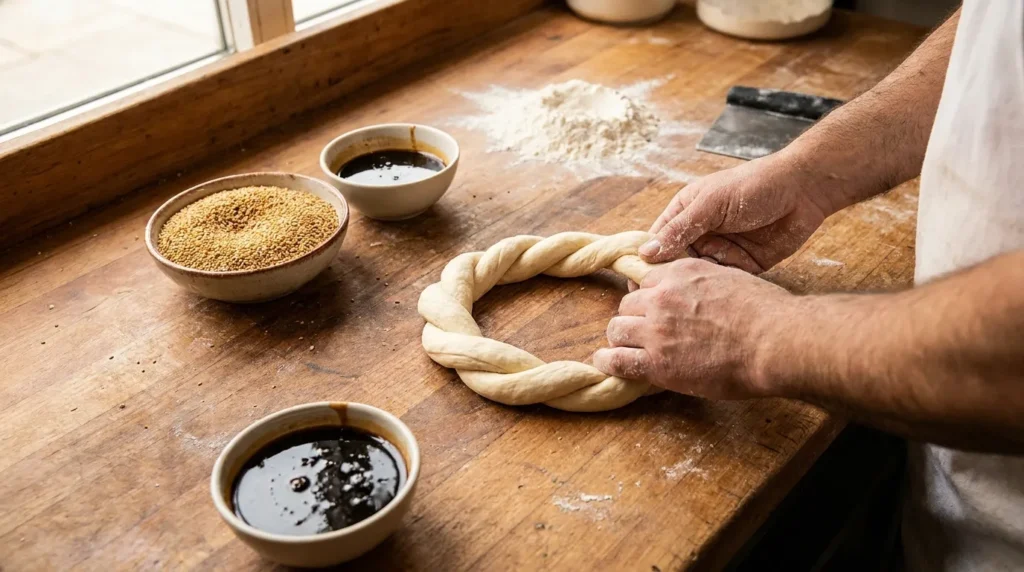
8. Twist and Shape the Rings
Take two dough ropes and place them side by side. Join them at one end.
Twist the ropes around each other, then bring the ends together to form a circular ring.
Press the ends firmly to seal. Repeat with the remaining dough portions to make six rings.
The twist gives the bread its attractive traditional appearance.
9. Dip in Molasses and Sesame
Dip each shaped ring into the molasses mixture, turning it to coat all sides.
Allow excess liquid to drip away, then transfer the ring to the toasted sesame seeds.
Turn and press gently so the seeds cover the surface generously.
Arrange the coated rings on a baking tray lined with parchment paper, leaving space between them.
10. Rest Before Baking
Cover the shaped rings loosely and let them rest for approximately 15–20 minutes.
This short second rise helps create a lighter interior. Meanwhile, preheat the oven to 220°C (425°F).
11. Bake Until Golden
Bake the rings for approximately 18–22 minutes, or until deeply golden brown and cooked through.
If your oven has hot spots, rotate the baking tray halfway through cooking.
The sesame seeds should look toasted, and the bread should sound slightly hollow when tapped underneath.
12. Cool and Serve
Transfer the baked simit to a wire rack. Let them cool slightly before serving.
They are especially delicious while still warm, when the crust is crisp and the inside is soft and chewy.
Tips for Perfect Homemade Simit
Measure flour carefully: Too much flour can make the dough heavy. Add it gradually if adjusting the texture.
Use warm water: Hot water can harm the yeast, while cold water may slow rising.
Knead thoroughly: Proper kneading develops the gluten needed for a chewy bread texture.
Allow enough rising time: The dough should become noticeably larger before shaping.
Seal the rings well: Press the joined ends firmly to prevent them from opening during baking.
Use plenty of sesame seeds: A generous coating creates the distinctive appearance and nutty flavor.
Avoid overbaking: Deep golden color is desirable, but excessively dark sesame seeds can taste bitter.
Variations and Substitutions
Whole-Wheat Simit
Replace up to half of the white flour with whole-wheat flour. The dough may need a little extra water, and the finished bread will have a heartier texture.
Mini Simit
Divide the dough into smaller portions and make mini rings. Reduce the baking time and begin checking for doneness earlier.
Extra-Sesame Simit
Use additional sesame seeds and gently press them onto the dough after dipping to create a thicker coating.
Herb-Flavored Simit
Add a small amount of dried oregano or thyme to the dough for a savory variation. This is not the classic version but makes a delicious homemade bread.
Honey-Coated Alternative
If grape molasses is unavailable, use a little honey diluted with water. The flavor will be sweeter and less traditional, but the sesame seeds should still adhere.

What to Serve with Turkish Sesame Bread Rings
Simit is wonderfully versatile and can be served with many breakfast and snack foods.
- White cheese or feta: A salty cheese pairs beautifully with the nutty sesame crust.
- Olives: Serve with green or black olives for a simple Turkish-inspired breakfast.
- Fresh vegetables: Tomatoes and cucumbers add freshness.
- Jam and honey: Sweet spreads create a delicious contrast.
- Cream cheese: A creamy spread makes a convenient snack.
- Tea: Turkish-style black tea is a classic accompaniment.
You can also slice a simit horizontally and fill it with cheese, lettuce, tomatoes, or eggs to make a satisfying sandwich.
Storage and Freezing
Room-temperature storage: Once completely cool, place simit in an airtight bag or container. For the best texture, enjoy within 1–2 days.
Refrigeration: Refrigeration can make bread stale more quickly, so room-temperature storage is generally preferable for short-term use.
Freezing: Freeze completely cooled rings in freezer-safe bags for up to 2 months. Separate them with parchment if stacking.
Reheating: Warm in an oven at 170°C (340°F) for approximately 5–8 minutes. This helps refresh the crust.
For a softer result, wrap the bread loosely in foil before warming.
Frequently Asked Questions
1. What is simit?
Simit is a traditional Turkish circular bread covered in sesame seeds. It has a crisp exterior and a soft, chewy center.
2. Can I use all-purpose flour?
Yes. All-purpose flour works well for homemade simit. Bread flour can produce a slightly chewier texture.
3. Why is grape molasses used?
Grape molasses adds color and a subtle sweetness while helping sesame seeds stick to the dough.
4. Can I make simit without molasses?
Yes. A diluted honey mixture can work, although the flavor and color will be different.
5. Why did my simit turn out dense?
Possible causes include too much flour, insufficient kneading, inactive yeast, or inadequate rising time.
6. Do I have to toast the sesame seeds first?
No. Toasting is optional, but it enhances their nutty flavor. Avoid browning them too much before baking.
7. Can I prepare the dough the night before?
Yes. Refrigerate the covered dough after kneading and allow it to warm slightly before shaping. A slower rise can develop flavor.
8. Can I make smaller rings?
Absolutely. Mini simit are excellent for parties and snack platters. Adjust the baking time for their smaller size.
9. How do I keep simit fresh?
Store cooled bread in an airtight container at room temperature and freeze any extra rings you will not eat within a couple of days.
10. What is the best way to eat simit?
Enjoy it warm with cheese, olives, tomatoes, cucumbers, or tea. It also makes a delicious sandwich bread.
Conclusion
Homemade Turkish Sesame Bread Rings are a rewarding baking project that brings the flavor of a traditional bakery favorite into your kitchen. With their chewy centers, crisp golden crusts, and generous sesame coating, simit makes a delicious breakfast, snack, or sandwich base. Follow the rising and shaping steps carefully, and enjoy these freshly baked rings with your favorite savory or sweet accompaniments.