
Ultimate Cheesy Beef Lasagna is the perfect comfort food for anyone who loves rich tomato sauce, savory ground beef, tender pasta, and layers of gooey melted cheese. Baked until golden and bubbling, this homemade lasagna brings together classic Italian-inspired flavors in a hearty dish that is ideal for family dinners, weekend meals, and special gatherings.
Each layer adds something delicious. The beef sauce is cooked with onion, garlic, tomatoes, and Italian herbs for a deep, savory flavor. Creamy ricotta cheese adds a soft, rich layer, while mozzarella melts beautifully between the pasta sheets. Parmesan cheese finishes the dish with a salty, golden topping that makes every serving irresistible.
Although lasagna looks impressive, it is surprisingly manageable to prepare at home. The sauce can simmer while the other ingredients are prepared, and the layers are easy to assemble in a baking dish. Once everything is stacked, the oven does most of the work, turning the separate ingredients into a cohesive, cheesy meal.
This recipe is designed to deliver a flavorful meat sauce, a creamy cheese filling, and a satisfying balance between pasta and toppings. It is perfect for serving straight from the baking dish, with a fresh salad or warm garlic bread on the side.
Whether you are preparing dinner for the family or looking for a make-ahead meal for a busy week, Ultimate Cheesy Beef Lasagna is a reliable favorite. Make it once, and the combination of tender pasta, rich beef, and melted cheese may earn it a permanent place in your recipe collection.
Why You Will Love This Recipe
Loaded with cheese: Ricotta, mozzarella, and Parmesan create creamy, stretchy, savory layers.
Rich beef flavor: Ground beef simmered with tomatoes, garlic, onion, and herbs makes a hearty sauce.
Comforting and filling: Pasta, meat sauce, and cheese combine to create a satisfying main course.
Great for family meals: One baking dish provides generous portions for sharing.
Make-ahead friendly: Prepare the sauce or assemble the lasagna in advance to simplify dinner.
Easy to customize: Add vegetables, adjust the herbs, or use a different cheese blend.
Beautiful presentation: Golden melted cheese and neatly stacked layers make every slice look inviting.
Excellent leftovers: The flavors develop as the lasagna rests, and the slices reheat well for future meals.
Recipe Overview
- Preparation time: 30 minutes
- Cooking time: 50–60 minutes
- Resting time: 15 minutes
- Total time: Approximately 1 hour and 35 minutes to 1 hour and 45 minutes
- Servings: 8
- Course: Main course
- Cuisine: Italian-inspired
- Cooking method: Stovetop and oven
- Difficulty: Moderate
Ingredients for Ultimate Cheesy Beef Lasagna
These ingredients make one generous 9 × 13-inch (23 × 33 cm) lasagna.
For the Beef Sauce
- 1 pound (450 g) ground beef
- 1 tablespoon olive oil, if needed
- 1 medium onion, finely diced
- 4 garlic cloves, minced
- 2 tablespoons tomato paste
- 1 can (28 ounces or approximately 800 g) crushed tomatoes
- ½ cup (120 ml) water or beef broth
- 1 teaspoon dried oregano
- 1 teaspoon dried basil
- 1 teaspoon paprika
- 1 teaspoon salt, or to taste
- ½ teaspoon black pepper
- ½ teaspoon sugar, optional, to balance acidic tomatoes
- 1 bay leaf, optional
For the Cheese Filling
- 15 ounces (425 g) ricotta cheese
- 1 large egg
- ¼ cup (25 g) grated Parmesan cheese
- 2 tablespoons chopped fresh parsley, or 1 teaspoon dried parsley
- ¼ teaspoon black pepper
- A small pinch of salt, or to taste
For the Pasta Layers
- 12 lasagna noodles, or enough for three layers in your baking dish
- 3 cups (300 g) shredded mozzarella cheese
- ½ cup (50 g) grated Parmesan cheese, divided
- A little olive oil, for the baking dish if needed
Note: If using no-boil lasagna sheets, follow the package instructions and ensure the sauce provides enough moisture for the pasta to cook. The instructions below are written for regular lasagna noodles that are boiled before assembly.
Ingredient Notes and Substitutions
Ground beef: Beef with a moderate fat content provides a flavorful sauce. If using fattier beef, drain excess grease after browning.
Crushed tomatoes: These form the base of the meat sauce. Canned crushed tomatoes provide consistent flavor and texture. Passata can also work, although the sauce may need less added liquid.
Tomato paste: Tomato paste deepens the tomato flavor and gives the sauce a richer taste.
Lasagna noodles: Traditional lasagna noodles create sturdy layers. Cook them according to the package directions, stopping when they are just al dente so they do not become overly soft in the oven.
Ricotta cheese: Ricotta provides a creamy, mild cheese layer. If unavailable, cottage cheese blended until smooth can be used as an alternative.
Mozzarella: Low-moisture mozzarella melts well and creates the classic stretchy cheese topping. Fresh mozzarella can be used if drained thoroughly and patted dry.
Parmesan: Parmesan contributes a savory, salty flavor. Use a vegetarian-friendly hard cheese if needed.
Egg: The egg helps the ricotta filling hold together when baked. It can be omitted, although the filling may be softer.
Herbs and spices: Oregano and basil provide classic Italian-inspired flavor, while paprika adds warmth and color.
Equipment You Will Need
- 9 × 13-inch (23 × 33 cm) baking dish
- Large skillet or saucepan
- Large pot for boiling pasta
- Colander
- Mixing bowl
- Wooden spoon or spatula
- Whisk or fork
- Measuring cups and spoons or kitchen scale
- Aluminum foil
- Sharp knife
- Cutting board
- Oven mitts
A baking dish with reasonably high sides is helpful because it allows the pasta, meat sauce, and cheese layers to fit comfortably without overflowing.
How to Make Ultimate Cheesy Beef Lasagna
Step 1: Prepare the Ingredients
Finely dice the onion and mince the garlic. Measure the tomatoes, tomato paste, herbs, and seasonings.
Shred the mozzarella and grate the Parmesan if they are not already prepared.
Preheat the oven to 375°F (190°C). Lightly grease the baking dish with a little olive oil or cooking spray.
Preparing the ingredients before cooking makes the assembly process easier and helps prevent any layer from being forgotten.
Step 2: Brown the Ground Beef
Heat a large skillet over medium heat. Add the olive oil if needed, followed by the ground beef.
Break the beef into small pieces with a wooden spoon or spatula. Cook for approximately 6–8 minutes, stirring occasionally, until browned and no pink remains.
If the beef releases a large amount of grease, carefully drain the excess.
Add the diced onion and cook for another 3–4 minutes, until softened. Stir in the minced garlic and cook for approximately 30 seconds, until fragrant.
Avoid browning the garlic too heavily, as burnt garlic can give the sauce a bitter flavor.
Step 3: Build the Tomato Beef Sauce
Stir the tomato paste into the beef mixture and cook for about 1 minute.
Add the crushed tomatoes, water or beef broth, oregano, basil, paprika, salt, black pepper, and optional sugar. Add the bay leaf if using.
Stir thoroughly, scraping the bottom of the pan to release any browned bits.
Bring the sauce to a gentle simmer, then reduce the heat to low. Leave the pan uncovered or partially covered, stirring occasionally.
Step 4: Simmer Until Rich
Allow the beef sauce to simmer for approximately 20–25 minutes.
The sauce should become thicker, more flavorful, and slightly reduced. It should be moist enough to spread between the pasta layers but not watery.
Remove the bay leaf before assembling the lasagna.
Taste the sauce and adjust the seasoning if necessary. If it becomes too thick, add a small splash of water or broth. If it is still very watery, continue simmering for a few more minutes.
A well-reduced sauce helps the lasagna hold its shape when sliced.
Step 5: Cook the Lasagna Noodles
While the sauce simmers, bring a large pot of salted water to a boil.
Add the lasagna noodles and cook according to the package instructions until just al dente. Avoid overcooking because the noodles will continue to soften in the oven.
Drain the noodles carefully and arrange them flat on a lightly oiled tray or clean surface so they do not stick together.
If the noodles need to wait before assembly, keep them separated. Follow the package instructions if using a different type of lasagna sheet.
Step 6: Prepare the Ricotta Filling
In a mixing bowl, combine the ricotta cheese, egg, ¼ cup of Parmesan, parsley, black pepper, and a small pinch of salt.
Mix until the ingredients are evenly combined.
The filling should be creamy and spreadable. If the ricotta is especially watery, drain it briefly before mixing to prevent excess moisture from entering the lasagna.
Set the cheese mixture aside while preparing to assemble the dish.
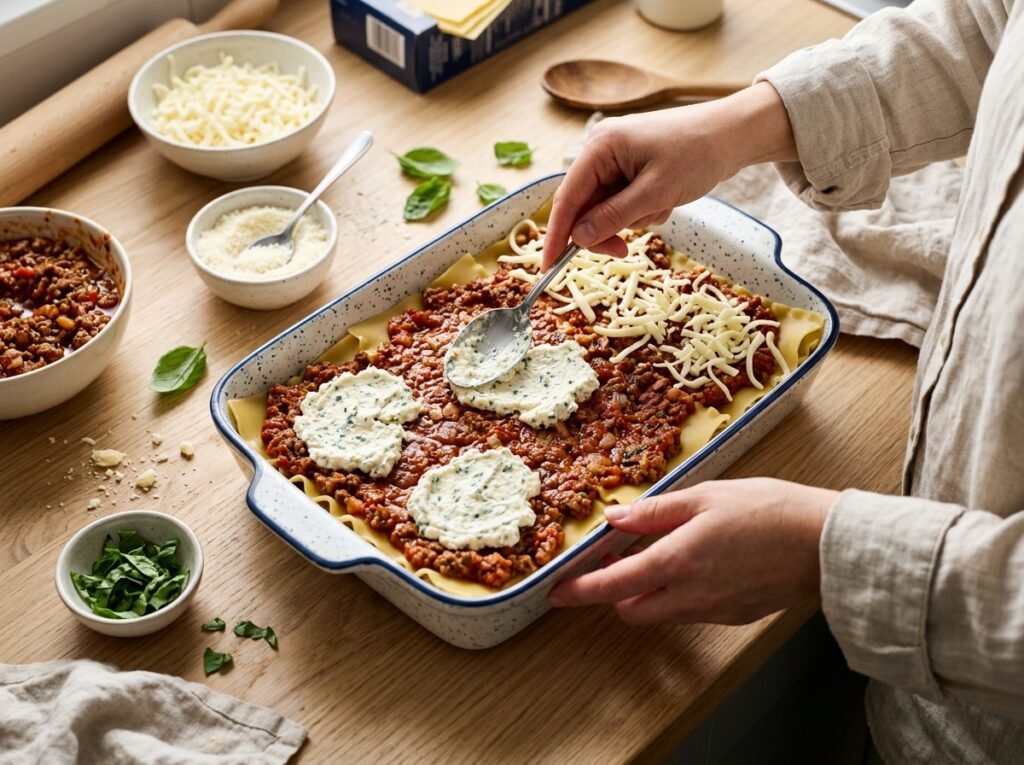
Step 7: Start the First Layer
Spread a thin layer of beef sauce across the bottom of the prepared baking dish.
Arrange lasagna noodles over the sauce in a single layer. Depending on the size of the dish and noodles, three or four noodles may be needed for each pasta layer.
Spread approximately one-third of the ricotta mixture over the noodles. Spoon another layer of beef sauce on top, then sprinkle with a portion of the mozzarella.
The thin sauce layer at the bottom helps prevent the pasta from sticking to the dish.
Step 8: Build the Remaining Layers
Repeat the layering process:
- Add a layer of lasagna noodles.
- Spread another portion of the ricotta mixture.
- Spoon over the beef sauce.
- Sprinkle with mozzarella.
Repeat until you have three pasta layers, dividing the ingredients as evenly as possible.
Finish with the remaining beef sauce, making sure the top noodles are covered. Sprinkle the remaining mozzarella and Parmesan over the surface.
For the best result, reserve enough cheese for a generous top layer. This creates a golden, bubbly finish that makes the lasagna especially appetizing.
Step 9: Cover and Bake
Cover the baking dish loosely with aluminum foil, keeping the foil from pressing directly into the cheese if possible.
Bake in the preheated oven at 375°F (190°C) for approximately 30 minutes.
The foil helps the lasagna heat evenly and prevents the cheese from browning too quickly before the center is hot.
Place the dish on a baking tray if you want to catch any sauce that might bubble over.
Step 10: Uncover and Finish Baking
Carefully remove the foil and return the dish to the oven.
Bake for another 15–20 minutes, until the cheese is melted, bubbling, and golden in spots.
The sauce should bubble around the edges, and the pasta should be tender when tested with a knife.
If the top needs additional color, use the oven’s grill or broiler setting briefly, watching continuously to prevent burning.
If the lasagna was assembled cold from the refrigerator, it will need additional baking time. Check that the center is thoroughly hot before serving.
Step 11: Rest Before Slicing
Remove the lasagna from the oven and let it rest for at least 15 minutes.
This step is important because the sauce and cheese need time to settle. Cutting too soon can cause the layers to slide apart and make the slices difficult to serve neatly.
Use a sharp knife to cut the lasagna into eight portions. A flat spatula helps lift each slice from the baking dish.
Step 12: Serve and Enjoy
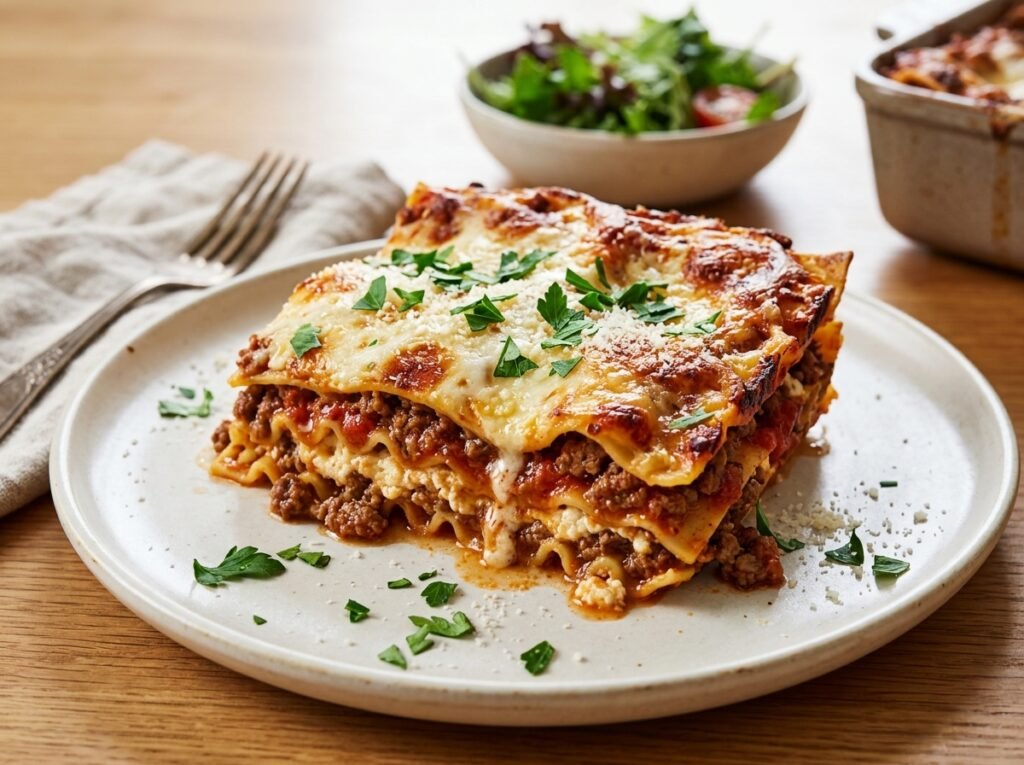
Transfer each portion to a plate and finish with a little chopped parsley or Parmesan if desired.
Serve the lasagna while warm, with garlic bread, a fresh green salad, or roasted vegetables.
Each slice should reveal layers of tender pasta, rich beef sauce, creamy ricotta, and melted mozzarella. The golden cheese topping adds the perfect finishing touch.
Tips for the Best Cheesy Beef Lasagna
Simmer the sauce long enough. A thicker sauce helps the layers hold together and prevents the lasagna from becoming watery.
Do not overcook the noodles. Cook them until just al dente so they maintain their structure during baking.
Drain watery ingredients. Excess moisture from ricotta or fresh mozzarella can make the finished dish too soft.
Spread ingredients evenly. Consistent layers make each serving balanced and flavorful.
Cover the lasagna at first. Foil helps heat the center while protecting the cheese from excessive browning.
Uncover for the final bake. This allows the cheese to become golden and bubbling.
Let it rest. Fifteen minutes of resting makes slicing and serving much easier.
Use freshly shredded cheese when possible. It often melts more smoothly than pre-shredded cheese.
Season each component. Taste the meat sauce and ricotta mixture separately before assembling.
Use a suitable baking dish. High sides help contain the layers and bubbling sauce.
Delicious Variations
Extra Cheesy Lasagna
Increase the mozzarella to 3½ cups and sprinkle a little extra Parmesan between the layers. Keep the sauce thick enough to support the additional cheese.
Beef and Vegetable Lasagna
Add 1 cup of finely diced mushrooms, zucchini, or bell peppers to the skillet after softening the onion. Cook until the vegetables release and lose most of their moisture before adding the tomatoes.
Spicy Beef Lasagna
Add ¼–½ teaspoon of chili flakes to the beef sauce. Adjust the quantity according to your preferred heat level.
Creamy White Sauce Lasagna
Add a thin layer of béchamel sauce between the pasta and meat sauce. Reduce the amount of ricotta slightly if you want to avoid making the dish too rich.
Beef and Spinach Lasagna
Stir 1 cup of cooked, well-drained spinach into the ricotta filling. Squeeze out excess liquid before mixing to help maintain the lasagna’s structure.
No-Boil Lasagna
Use oven-ready lasagna sheets according to their package directions. Make sure the sauce contains enough moisture for the sheets to soften during baking, and follow the recommended cooking time.
Cottage Cheese Lasagna
Replace the ricotta with 425 g of cottage cheese. For a smoother texture, blend it briefly before combining it with the egg, Parmesan, and herbs.
Turkey Lasagna
Replace the ground beef with ground turkey. Add a little olive oil if needed and cook thoroughly before adding the tomatoes and seasonings.
What to Serve with Beef Lasagna
Lasagna is a hearty main course, so simple sides work particularly well.
- Garlic bread: Crispy edges and a soft center make it perfect for soaking up extra sauce.
- Green salad: Lettuce, cucumber, tomatoes, and a light dressing provide a refreshing contrast.
- Roasted vegetables: Broccoli, carrots, zucchini, or bell peppers add color and variety.
- Steamed green beans: A simple vegetable side balances the richness of the cheese.
- Tomato and cucumber salad: Fresh vegetables add brightness to the meal.
- Garlic mushrooms: Sautéed mushrooms pair well with the savory beef sauce.
- Herb breadsticks: These are convenient for family dinners and gatherings.
For a balanced dinner, serve one slice of lasagna with a generous side salad or roasted vegetables.
Make-Ahead Instructions
The beef sauce can be prepared up to 3 days in advance and stored in a covered container in the refrigerator.
The ricotta filling can also be mixed ahead of time and refrigerated. Keep it covered and use it within 1–2 days.
To assemble the lasagna ahead, layer the ingredients in the baking dish, cover tightly, and refrigerate promptly. For best quality, bake within 24 hours.
When baking a cold lasagna, allow extra time because the center starts at a lower temperature. Keep it covered during the initial baking period and check that the center reaches 165°F (74°C) before serving.
Do not leave the assembled lasagna at room temperature for extended periods.
Storage Instructions
Let leftover lasagna cool slightly, then divide it into portions and refrigerate in shallow, airtight containers within 2 hours of cooking.
Store at 40°F (4°C) or below and use within 3–4 days.
For longer storage, freeze individual portions or the entire lasagna in freezer-safe containers. Wrap tightly to help protect the food from freezer burn.
For best quality, use frozen lasagna within approximately 2–3 months. Label the container with the date.
If freezing an unbaked lasagna, use a freezer-safe baking dish and make sure all ingredients have been handled safely. Thaw in the refrigerator before baking when practical, then bake until the center is thoroughly hot.
How to Reheat Beef Lasagna
Oven method: Preheat the oven to 350°F (175°C). Place the lasagna in an oven-safe dish, cover with foil, and heat for approximately 20–30 minutes for refrigerated portions, depending on size. Remove the foil near the end if you want to refresh the cheese topping.
Microwave method: Place an individual portion on a microwave-safe plate. Cover loosely and heat in short intervals, rotating as needed, until hot throughout.
Air fryer method: Smaller portions can be reheated in an air fryer at approximately 320°F (160°C). Use an air-fryer-safe dish, cover loosely if the top browns too quickly, and check the center before serving.
For food safety, reheat leftovers to an internal temperature of 165°F (74°C). Avoid reheating the same portion repeatedly.
Frequently Asked Questions
1. Can beef lasagna be made ahead of time?
Yes. Assemble the lasagna, cover it, and refrigerate it for up to 24 hours before baking. Allow extra cooking time if it goes into the oven cold, and check that the center is hot throughout.
2. How do you keep lasagna from becoming watery?
Simmer the meat sauce until thick, drain watery cheese or vegetables, and avoid adding too much liquid. Letting the finished lasagna rest for at least 15 minutes also helps the layers set.
3. Which cheese is best for lasagna?
Mozzarella provides a stretchy, melted topping, ricotta creates a creamy filling, and Parmesan adds a savory finish. Together, they create a delicious balance of textures and flavors.
4. Do lasagna noodles need to be boiled first?
Regular lasagna noodles generally need to be boiled according to their package instructions. Oven-ready noodles do not usually require pre-boiling, but they need sufficient moisture and should be prepared according to the manufacturer’s directions.
5. How many layers should lasagna have?
This recipe uses three layers of pasta, with beef sauce and ricotta filling between them. The exact number of layers can vary with the size of your dish and the type of noodles.
6. Why does lasagna fall apart when sliced?
It may have too much liquid or may have been cut before resting. Allowing it to rest for 15 minutes after baking helps the sauce and cheese settle into firmer layers.
7. Can I replace ricotta cheese?
Yes. Cottage cheese blended until smooth is a useful alternative. Some cooks also use béchamel sauce, although it creates a different texture and flavor.
8. Can vegetables be added to beef lasagna?
Absolutely. Mushrooms, zucchini, spinach, and bell peppers all work well. Cook watery vegetables first and drain them so they do not release excess moisture into the layers.
9. Can this lasagna be frozen?
Yes. Freeze cooked and cooled portions in airtight, freezer-safe containers. For best quality, use within 2–3 months and reheat until the center reaches 165°F (74°C).
10. How do I know when lasagna is fully cooked?
The sauce should bubble around the edges, the cheese should be melted, and the pasta should be tender when tested with a knife. If the lasagna was assembled cold, check that the center reaches 165°F (74°C).
11. Can ground turkey replace ground beef?
Yes. Ground turkey can replace the beef in the same general quantity. Season it well and cook it thoroughly before adding the tomato sauce ingredients.
12. What is the best way to serve lasagna?
Let the lasagna rest, cut it into neat squares, and serve with garlic bread, salad, or roasted vegetables. A little chopped parsley or grated Parmesan adds a fresh finishing touch.
Final Thoughts
Ultimate Cheesy Beef Lasagna is a comforting, crowd-pleasing meal built around rich beef sauce, tender pasta, creamy ricotta, and plenty of melted cheese. Each layer contributes flavor and texture, while the golden topping makes the finished dish especially inviting.
Although the recipe takes a little time, most of the work involves simple preparation and layering. The sauce can be made ahead, the dish can be assembled before dinner, and leftovers make convenient meals for the next few days.
For the best results, simmer the sauce until thick, avoid overcooking the pasta, distribute the filling evenly, and let the lasagna rest before slicing.
Serve it warm with a fresh salad or garlic bread, and enjoy a generous slice of homemade cheesy beef lasagna that is perfect for sharing.