
Juicy & Tender Grilled Chicken is an easy, flavorful recipe that turns simple chicken breasts into a delicious meal with a golden, lightly charred outside and a moist, tender center. Made with everyday ingredients, a zesty marinade, and a few simple grilling techniques, this chicken is perfect for weeknight dinners, weekend barbecues, meal prep, and summer cookouts.
Chicken breast is naturally lean, making it a popular choice for a lighter meal. However, it can quickly become dry if it is overcooked. The secret to delicious grilled chicken is to use an oil-based marinade, add the right balance of seasonings, prepare the chicken evenly, and cook it until it reaches a safe internal temperature.
This recipe combines olive oil, lemon juice, garlic, paprika, and dried herbs to create a savory marinade with a bright, fresh flavor. The chicken absorbs the seasoning while resting, then develops beautiful grill marks as it cooks. A short resting period after grilling helps the juices settle, leaving every slice tender and satisfying.
Serve this grilled chicken with roasted vegetables, a fresh salad, rice, potatoes, or warm flatbread. It also works beautifully in sandwiches, wraps, grain bowls, and meal-prep containers. With minimal preparation and straightforward instructions, this recipe makes it easy to enjoy restaurant-style grilled chicken at home.
Why You Will Love This Recipe
Juicy and tender: Evenly prepared chicken and careful cooking help prevent dry, tough meat.
Simple ingredients: Olive oil, lemon juice, garlic, paprika, and herbs create plenty of flavor without complicated ingredients.
Quick and convenient: The marinade takes only a few minutes to prepare, and the chicken cooks quickly on a hot grill.
Perfect for meal prep: Cook a batch ahead of time and use it in salads, wraps, sandwiches, or lunch bowls throughout the week.
Easy to customize: Adjust the herbs, spices, and lemon to suit your preferred flavor.
Works with different equipment: Use an outdoor grill, an indoor grill pan, or a suitable stovetop grilling surface.
Great for many occasions: This chicken fits casual family dinners, barbecue gatherings, picnics, and balanced everyday meals.
Recipe Overview
- Preparation time: 10 minutes
- Marinating time: 30 minutes to 2 hours
- Cooking time: 10–16 minutes, depending on thickness
- Resting time: 5 minutes
- Total time: Approximately 55 minutes to 2 hours and 31 minutes, including marinating
- Servings: 4
- Course: Main course
- Cuisine: American-inspired
- Cooking method: Grilling
- Difficulty: Easy
Ingredients for Juicy & Tender Grilled Chicken
These ingredients make four servings. Choose boneless, skinless chicken breasts of similar size so they cook at approximately the same rate.
For the Chicken
- 4 boneless, skinless chicken breasts, approximately 6–8 ounces (170–225 g) each
- 2 tablespoons olive oil
- 2 tablespoons fresh lemon juice
- 3 garlic cloves, minced
- 1 teaspoon paprika
- 1 teaspoon dried oregano
- 1 teaspoon onion powder
- 1 teaspoon salt, or to taste
- ½ teaspoon freshly ground black pepper
- ½ teaspoon dried thyme
- ¼ teaspoon chili flakes, optional
For Serving, Optional
- Fresh chopped parsley
- Lemon wedges
- A light drizzle of olive oil
- Your favorite grilled vegetables or salad
Ingredient Notes and Substitutions
Chicken breasts: Boneless, skinless breasts are convenient and cook quickly. If the pieces are especially thick, gently pound them to an even thickness before marinating. This helps the thinner portions avoid drying out while the thicker portions finish cooking.
Olive oil: Oil helps coat the chicken evenly, carries the seasonings, and supports browning on the grill. Avocado oil or another suitable high-heat cooking oil can be substituted.
Lemon juice: Fresh lemon juice adds brightness and balances the richness of the oil. Bottled lemon juice works when fresh lemons are unavailable. Avoid leaving the chicken in a strongly acidic marinade for too long, as the texture can become less pleasant.
Garlic: Fresh minced garlic creates a savory flavor. Half a teaspoon of garlic powder can be used in place of each garlic clove if needed, although the flavor will be slightly different.
Paprika: Regular paprika provides a warm color and mild pepper flavor. Smoked paprika is a good option for a deeper, smoky taste.
Dried herbs: Oregano and thyme give the chicken a classic savory flavor. Italian seasoning can replace both if that is what is available.
Chili flakes: These are optional. Leave them out for a mild family-friendly version or add a little more for extra heat.
Equipment You Will Need
- Outdoor grill or indoor grill pan
- Mixing bowl
- Whisk or fork
- Measuring spoons
- Tongs
- Cutting board
- Meat thermometer
- Food-safe container or resealable bag for marinating
- Clean plate for resting the cooked chicken
A meat thermometer is especially helpful because chicken breasts vary in thickness. It provides a more reliable indication of doneness than judging the color of the meat alone.
How to Make Juicy & Tender Grilled Chicken
Step 1: Prepare the Chicken
Place the chicken breasts on a clean cutting board. If they have unevenly thick sections, gently pound the thicker parts with a meat mallet until the breasts are approximately ¾ inch (2 cm) thick throughout.
The goal is not to flatten the chicken completely. Instead, create a reasonably even thickness so the meat cooks consistently.
Do not wash raw chicken, as splashing water can spread harmful bacteria around the sink and nearby surfaces. If needed, pat the chicken dry with disposable paper towels and wash your hands after handling it.
Step 2: Make the Marinade
In a mixing bowl, combine the olive oil, lemon juice, minced garlic, paprika, oregano, onion powder, salt, black pepper, thyme, and optional chili flakes.
Whisk until the ingredients are evenly mixed. The marinade should smell fresh, garlicky, and slightly citrusy, with a warm aroma from the paprika and herbs.
Taste a small amount of the marinade before adding the raw chicken and adjust the seasoning if necessary. Remember that it will season several chicken breasts, so the flavor should be noticeable without being overwhelmingly salty.
Step 3: Marinate the Chicken
Place the chicken breasts in a food-safe container or resealable bag. Pour the marinade over them and turn the pieces until every surface is coated.
Cover the container or seal the bag and refrigerate for at least 30 minutes. For a deeper flavor, marinate for up to 2 hours.
Keep the chicken refrigerated while it marinates. Never leave raw chicken on the counter to speed up the process.
Before grilling, remove the chicken from the marinade and let excess liquid drip off. Discard the used marinade unless it is brought to a full boil before being used as a sauce. Never brush cooked chicken with marinade that has touched raw chicken.
Step 4: Preheat the Grill
Preheat an outdoor grill to medium-high heat, aiming for approximately 400–450°F (204–232°C) at the cooking surface.
For an indoor grill pan, heat the pan over medium-high heat until thoroughly hot. Lightly oil the cooking surface using a suitable high-heat oil, taking care not to create excess smoke.
A properly preheated grill helps the chicken develop golden-brown grill marks and reduces the likelihood of sticking.
If using an outdoor grill, clean the grates before cooking. Make sure the grill is stable and positioned in a well-ventilated outdoor area.
Step 5: Grill the First Side
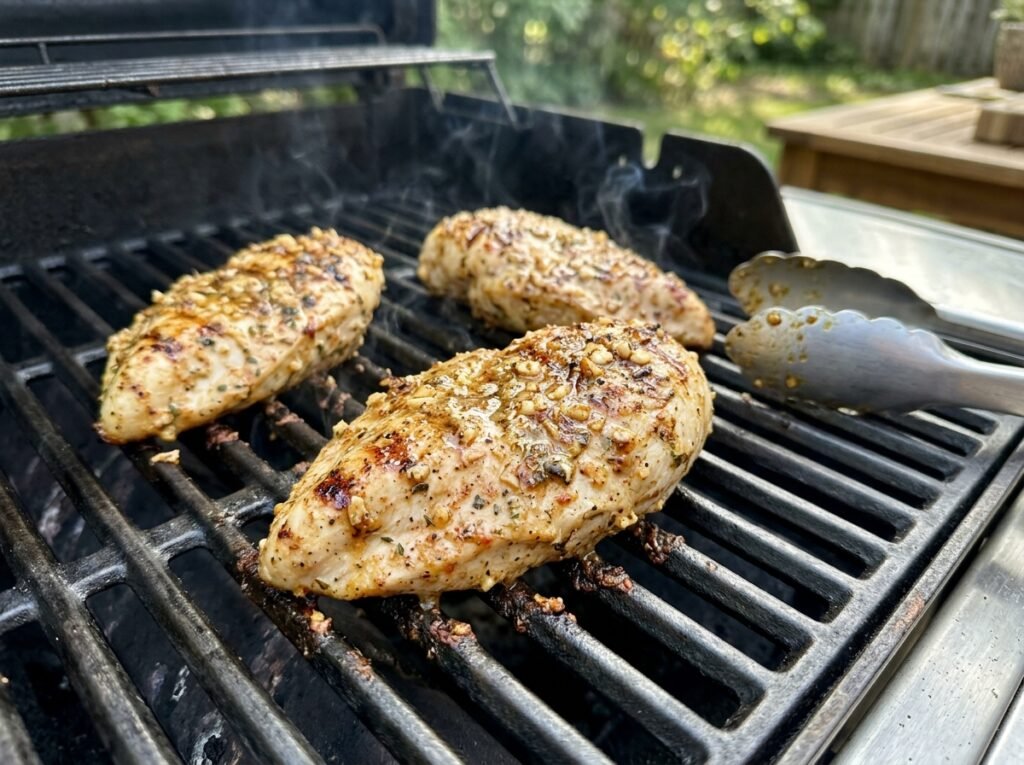
Place the marinated chicken breasts on the hot grill using tongs. Leave space between the pieces so heat can circulate.
Cook for approximately 5–7 minutes without repeatedly moving the chicken. The exact time depends on the thickness of the breasts and the heat of the grill.
Once the chicken develops attractive grill marks and releases relatively easily from the grates, it is ready to turn. If it sticks firmly, give it a little more time rather than pulling it away forcefully.
Avoid pressing the chicken with a spatula. Pressing can force juices out of the meat without improving its tenderness.
Step 6: Flip and Finish Cooking
Turn the chicken breasts with clean tongs and cook the second side for another 5–7 minutes, adjusting the heat as needed.
Thicker pieces may need additional cooking time, while thinner pieces can finish sooner. If the outside is browning too quickly before the center is cooked, move the chicken to a cooler section of the grill or reduce the heat.
The most important step is checking the internal temperature. Insert a food thermometer into the thickest part of each breast, avoiding the grill surface and any bone if using bone-in chicken.
Chicken is safe to eat when its internal temperature reaches 165°F (74°C). Check each piece individually because they may finish at different times. Do not rely on cooking time or exterior color alone.
Step 7: Rest the Chicken
Transfer the cooked chicken to a clean plate or cutting board. Let it rest for about 5 minutes before slicing.
Resting gives the juices time to redistribute throughout the meat, helping the chicken remain moist when cut. Avoid leaving it uncovered in a drafty area for an extended period, as it can cool quickly.
If desired, squeeze a little fresh lemon juice over the chicken and sprinkle it with chopped parsley just before serving.
Step 8: Slice and Serve
Slice the chicken across the grain into strips or serve each breast whole. Arrange it on a platter with lemon wedges and your favorite sides.
The finished chicken should have a lightly charred exterior, fragrant garlic and herbs, and a juicy interior. Serve immediately while warm, or cool promptly and refrigerate for later meals.
Tips for the Juiciest Grilled Chicken
Aim for even thickness. Uniform pieces cook more consistently, reducing the chance of dry edges and undercooked centers.
Do not skip the marinade. Even a short 30-minute marinating period adds flavor. When time allows, about 1–2 hours in the refrigerator works well for this recipe.
Preheat the grill properly. A hot cooking surface helps create a flavorful browned exterior.
Use a thermometer. Remove the chicken from the grill when each breast reaches 165°F (74°C). Guessing can lead to overcooking or unsafe undercooking.
Avoid excessive heat. If the outside chars before the inside cooks, reduce the heat or move the chicken to a cooler area.
Let the chicken rest. Five minutes is usually enough for these boneless breasts.
Slice across the grain. Cutting across the muscle fibers creates shorter fibers and a more tender bite.
Do not reuse raw marinade without cooking it. Discard it or boil it thoroughly before using it as a sauce. Fresh marinade reserved before adding the chicken is a safer option for serving.
Delicious Variations
Lemon Herb Grilled Chicken
Add extra lemon zest, parsley, and a little rosemary to the marinade. This version has a fresh, fragrant flavor that pairs beautifully with roasted potatoes and green vegetables.
Smoky Paprika Chicken
Replace the regular paprika with smoked paprika and add a pinch of cumin. The result has a deeper, smoky flavor that works well in rice bowls, wraps, and barbecue-style meals.
Spicy Grilled Chicken
Increase the chili flakes or add a small amount of cayenne pepper. For a balanced spicy marinade, keep the lemon juice and garlic in the recipe to brighten the flavor.
Garlic Butter Finish
After cooking, brush the rested chicken with a small amount of melted butter mixed with fresh garlic and chopped parsley. Add the butter just before serving for a rich, savory finish.
Mediterranean-Style Chicken
Add a pinch of ground cumin and serve the chicken with cucumber, tomatoes, lettuce, warm flatbread, and a yogurt-based garlic sauce. This makes a satisfying wrap or platter.
Honey-Paprika Chicken
For a subtle sweet-and-savory flavor, add 1 teaspoon of honey to the marinade. Because honey can brown quickly, watch the chicken carefully and lower the heat if the surface darkens too fast.
Boneless Chicken Thighs
Boneless, skinless chicken thighs can be prepared with the same marinade. They generally contain more fat than chicken breasts and can be more forgiving on the grill. Cooking time will vary with thickness, so use a thermometer and ensure the internal temperature reaches at least 165°F (74°C).
What to Serve with Grilled Chicken
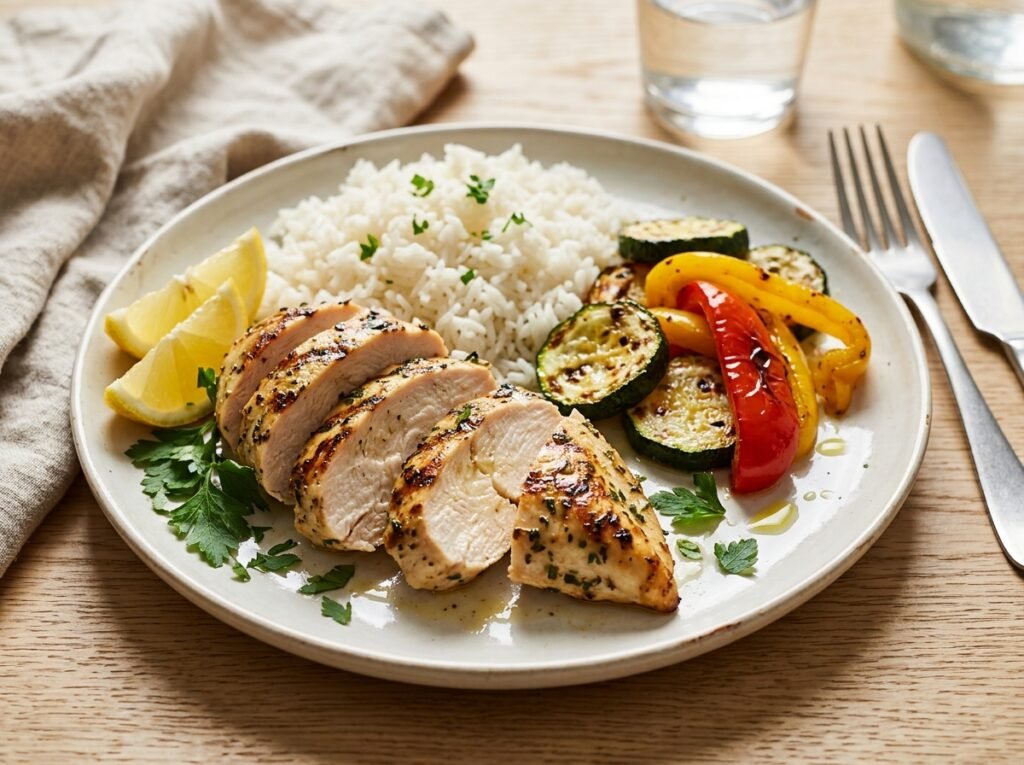
Juicy grilled chicken pairs well with a wide range of side dishes, from fresh salads to comforting potatoes.
- Fresh salads: Garden salad, cucumber-tomato salad, or lemony coleslaw.
- Rice dishes: Steamed rice, herbed rice, or vegetable rice.
- Potatoes: Roasted potatoes, grilled potato wedges, or mashed potatoes.
- Vegetables: Grilled zucchini, bell peppers, asparagus, carrots, or broccoli.
- Bread: Warm flatbread, pita, dinner rolls, or garlic bread.
- Sauces: Garlic yogurt sauce, tzatziki-style sauce, herb sauce, or a fresh lemon dressing.
- Wraps and sandwiches: Combine sliced chicken with lettuce, tomato, onion, and your favorite sauce.
- Meal-prep bowls: Add rice or quinoa, roasted vegetables, and a light dressing for an easy lunch.
For a simple complete meal, serve one grilled chicken breast with rice and grilled vegetables, finishing with a squeeze of fresh lemon.
Make-Ahead Instructions
The marinade can be prepared up to a day ahead and kept covered in the refrigerator. For best food-safety practices, store it separately from the raw chicken until ready to use.
The chicken can also be placed in the marinade and refrigerated for up to 2 hours for this recipe. Avoid extending the lemon-based marinade much longer, as the acidic ingredients can affect the texture.
If preparing food for guests, organize the side dishes and serving platter before grilling. This allows the cooked chicken to be served promptly after its short resting period.
Storage Instructions
Allow leftover chicken to cool slightly, then place it in a shallow, airtight container and refrigerate within 2 hours of cooking. If the surrounding temperature is above 90°F (32°C), refrigerate within 1 hour.
Properly refrigerated cooked chicken should be used within 3–4 days. Store it at 40°F (4°C) or below.
For longer storage, freeze the chicken in airtight, freezer-safe packaging. For best quality, use within approximately 2–3 months. Label the container with the date so it is easy to keep track of.
Store the chicken separately from raw meat and use clean utensils when handling cooked leftovers.
How to Reheat Grilled Chicken
Oven method: Place the chicken in an oven-safe dish with a tablespoon of water or broth. Cover and heat in a 325°F (163°C) oven until the center reaches 165°F (74°C).
Skillet method: Slice the chicken and warm it in a covered skillet over medium-low heat with a small splash of broth or water. Stir or turn the pieces as needed and check that they reach 165°F (74°C).
Microwave method: Slice the chicken into even pieces and place them in a microwave-safe dish with a little water or broth. Cover loosely, heat in short intervals, and turn the pieces for even heating. Confirm that the chicken reaches 165°F (74°C).
Reheat only the portion needed, and avoid repeatedly cooling and reheating the same leftovers.
Frequently Asked Questions
1. How do you keep grilled chicken breast juicy?
Prepare the chicken to an even thickness, marinate it, cook over suitable heat, and use a thermometer to prevent overcooking. Let it rest for about 5 minutes before slicing.
2. How long should chicken breast be grilled?
Chicken breasts of roughly ¾-inch thickness often take around 10–16 minutes in total over medium-high heat. The actual time depends on thickness, grill temperature, and equipment. Always check for an internal temperature of 165°F (74°C).
3. Is it necessary to marinate chicken before grilling?
No, but marinating adds flavor and helps coat the chicken with oil and seasonings. Even 30 minutes can be useful when time is limited.
4. Can this recipe be made without an outdoor grill?
Yes. A stovetop grill pan works well. Preheat the pan, lightly oil the surface, and cook the chicken on both sides until it reaches 165°F (74°C). A regular heavy skillet can also be used, although it may produce fewer grill marks.
5. Should chicken breast be pounded before grilling?
Pounding is helpful when the breasts are thick or uneven. It promotes more consistent cooking and reduces the risk of the thinner edges drying out before the center is done.
6. Can frozen chicken be used?
Thaw the chicken safely in the refrigerator before marinating. Do not leave it on the counter to thaw. Once thawed, pat it dry if necessary and follow the recipe as written.
7. How can you tell when grilled chicken is done?
The most reliable method is a food thermometer inserted into the thickest part of the breast. It should read 165°F (74°C). The outside may look golden before the inside is fully cooked, so appearance alone is not enough.
8. Can the chicken be marinated overnight?
For this lemon-based marinade, a shorter period of 30 minutes to 2 hours is recommended for the best texture. If preparing overnight, leave out the lemon juice and add it shortly before cooking, keeping the chicken refrigerated throughout.
9. What can be used instead of olive oil?
Avocado oil or another suitable cooking oil can replace olive oil. Choose an oil appropriate for the heat level of your grill.
10. How should leftover grilled chicken be stored?
Refrigerate it in a shallow, airtight container within 2 hours of cooking and use it within 3–4 days. Freeze it for longer storage and reheat leftovers to 165°F (74°C).
11. Can grilled chicken be used for meal prep?
Absolutely. Cook the chicken, let it cool promptly, and divide it into meal-sized portions with rice, vegetables, or salad ingredients. Keep refrigerated portions at 40°F (4°C) or below and use them within 3–4 days.
12. Is this recipe spicy?
The basic recipe is mildly seasoned. The chili flakes are optional, so leave them out for a mild flavor or increase them for more heat.
Final Thoughts
Juicy & Tender Grilled Chicken is a simple, dependable recipe that transforms everyday chicken breasts into a flavorful meal. A quick garlic-herb marinade, evenly prepared meat, a properly heated grill, and careful temperature checking are the keys to a delicious result.
Serve the chicken hot with fresh vegetables and rice, slice it into wraps, or save portions for convenient lunches throughout the week. Once the basic method becomes familiar, the marinade can be customized with different herbs, spices, and citrus flavors to suit almost any menu.
For the best results, remember three essentials: marinate for flavor, cook to an internal temperature of 165°F (74°C), and allow the chicken to rest before slicing. These small steps help deliver tender, satisfying grilled chicken every time.